What is an After Action Review?
An After Action Review (AAR) is a tool designed to help teams assess their performance after completing a task, event, activity, or project. The primary purpose of an AAR is to facilitate a candid and constructive discussion among team members to uncover what was successfully executed, identify areas for improvement, and generate actionable insights for future endeavors. Unlike traditional performance evaluations, AARs focus on collective learning, fostering a culture of continuous improvement and adaptive learning within organizations. It is also a tool that can be used as a catalyst for cultural change.
How the After Action Review Originated
The modern After Action Review was formalized by the US Army as a way to improve organizational learning and performance. It provided a structured forum for participants to examine what was expected, what happened, why it happened, and how performance could improve. The approach emphasized candid discussion of both successes and shortcomings without turning the review into an individual performance evaluation.
Organizations outside the military later adapted AARs to learn from projects, launches, emergency responses, campaigns, and operational events. The format can vary by context, but the core purpose remains collective learning that can inform specific improvements.
The Four Phases of an After Action Review
The terminology used for AAR stages varies between frameworks. This guide groups the work into design, preparation, implementation, and dissemination, with dissemination including the essential follow-up on agreed recommendations.
Design
The first key part of an after action review (AAR) is the design phase. This stage involves outlining the objectives, setting the scope, and determining the key focus areas of the review. The goal is to ensure that the review is structured in a way that captures all critical elements of the activity or event being analyzed. During the design phase, it’s essential to identify the questions that will guide the review, such as:
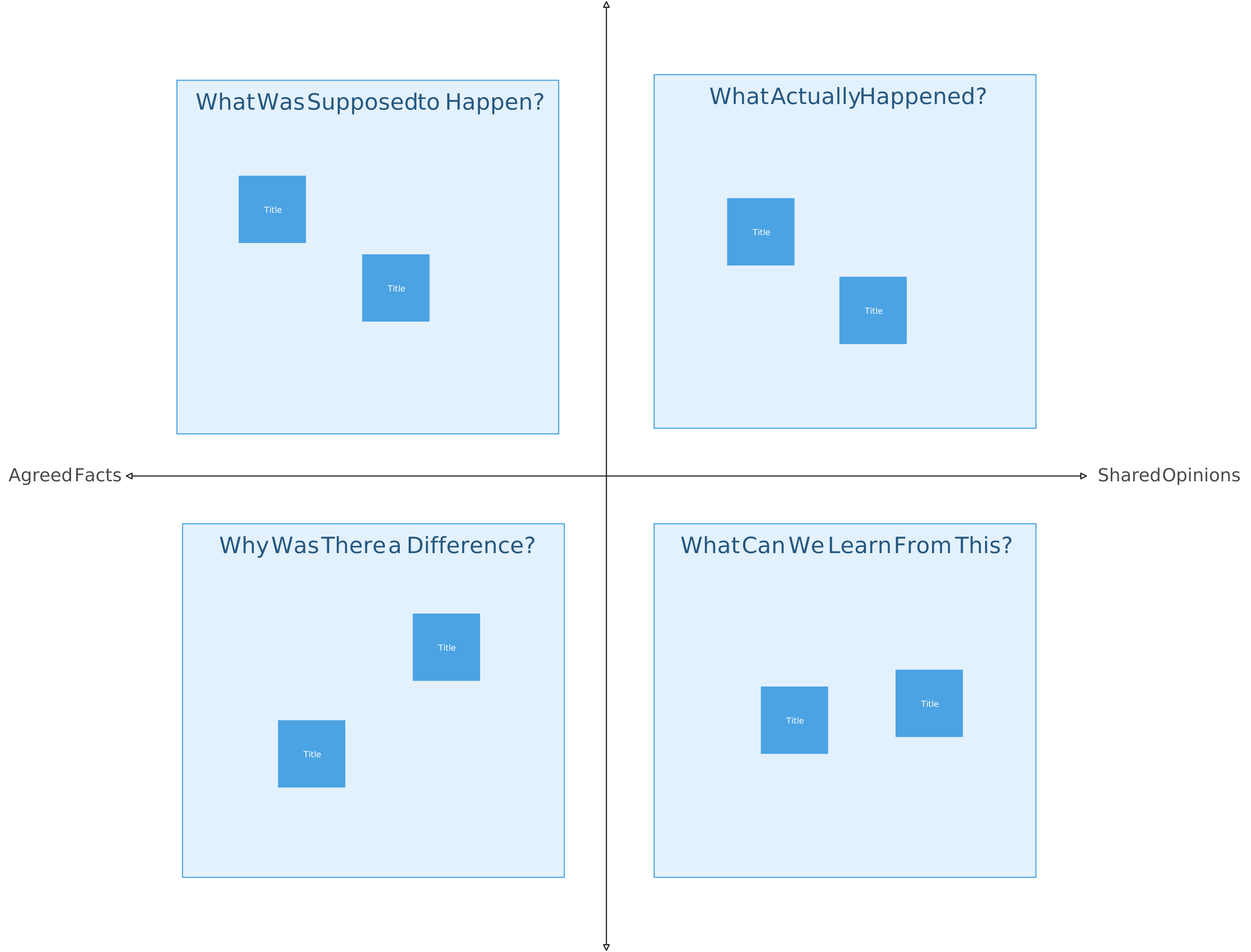
What was supposed to happen?
What actually happened?
By thoughtfully designing your AAR, you can lay the groundwork for meaningful insights and ensure that the process addresses specific performance aspects comprehensively.
Prepare
The preparation phase is crucial for the success of an AAR. This involves gathering all relevant data and resources that will be needed for the review, such as performance metrics, feedback from participants, and other documentation. It’s also important to select a neutral, skilled facilitator who can guide the conversation and ensure a balanced, open discussion. Additionally, ensuring that all team members understand the purpose and process of the AAR and are prepared to participate candidly is vital. This phase sets the stage for a productive review by making sure that all necessary information is at hand and all participants are ready to engage constructively.
Implement
The implementation phase is where the actual review takes place. This stage involves bringing the team together to discuss the key questions identified during the design phase. A typical AAR will cover questions such as:
What were the differences between what was planned and what actually occurred?
What worked and what didn’t work, and why?
It is important to foster an environment of openness and trust so participants feel comfortable sharing honest perspectives. A shared After Action Review template on Creately can help the facilitator organize observations, compare expected and actual outcomes, and keep supporting notes or files connected to the discussion. Real-time editing and contextual comments allow participants and process owners to review the findings together. The team should still validate conclusions before agreeing on follow-up actions.
Disseminate
The final part of an after action review is documenting, sharing, and following up on the findings. The report should capture the evidence reviewed, lessons identified, prioritized recommendations, responsible owners, and an agreed review point. Intranets or knowledge bases can make the results accessible, but publication alone does not ensure action. Owners need to incorporate approved changes into the relevant plans, procedures, or operational systems and report back on progress.
| Phase | Description |
| Design | Outline objectives, set scope, and determine focus areas. |
| Prepare | Gather data, select facilitator, and ensure team readiness. |
| Implement | Conduct the review with structured questions and discussion. |
| Disseminate | Document and share findings and recommendations. |
Benefits of Conducting an After Action Review
Conducting an after action review (AAR) provides numerous benefits that significantly enhance team performance and foster a culture of continuous improvement within an organization.
Promotes Continuous Learning
After action reviews are instrumental in creating a learning environment where team members can reflect on their actions and decisions. This process turns unconscious learning into explicit knowledge, helping teams understand what they did well and where improvements are needed. By regularly engaging in AARs, organizations can cultivate a culture of transparent communication and adaptive learning.
Identifying Successes and Areas for Improvement
A key benefit of AARs is their role in pinpointing both successes and areas needing improvement. By discussing questions such as “What was supposed to happen?”, “What actually happened?”, and “What would you do differently next time?”, teams can identify the factors that led to success and those that hindered performance. This practice not only highlights effective strategies but also uncovers pitfalls to avoid in future projects.
Actionable insights for future projects
Increased team cohesion and trust
Empowerment of team members through participation
Examples of Tangible Improvements Driven by AAR Insights
AARs can produce tangible improvements when teams convert observations into verified recommendations and accountable follow-through. The value comes from preserving useful practices, addressing documented gaps, and checking whether the resulting changes improve later work—not from conducting the meeting alone.
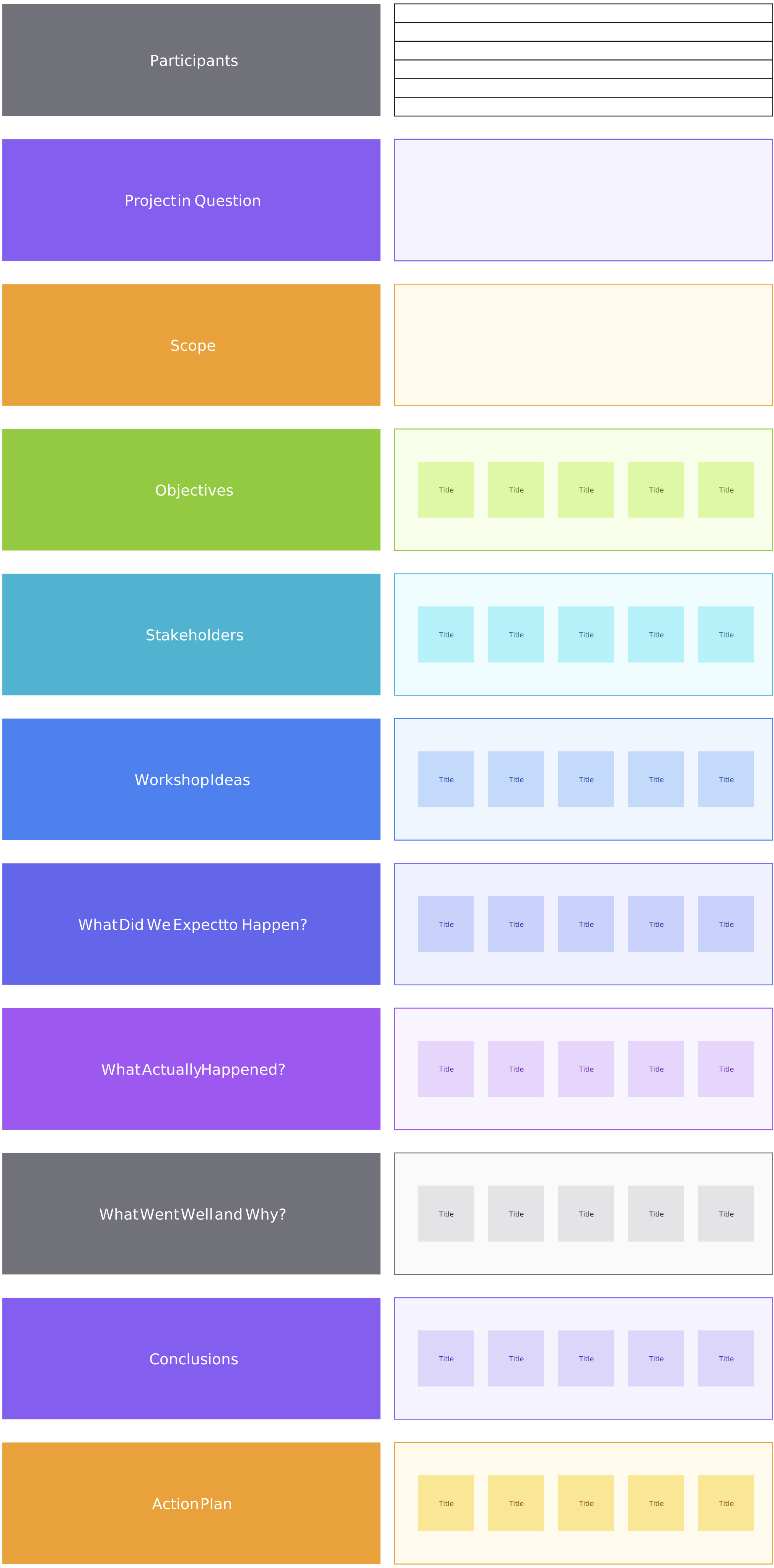

Steps to Conduct an Effective After Action Review
Conducting an effective after action review (AAR) requires a structured approach to ensure comprehensive insights and actionable feedback. Here are the key steps to plan and execute a successful AAR:
Planning an After Action Review
The foundation of a successful AAR lies in thorough planning. This includes:
Define Objectives: Clearly outline the goals of the AAR, such as identifying successes, areas for improvement, and lessons learned.
Select Participants: Choose team members who were directly involved in the project, as well as stakeholders who can provide valuable perspectives.
Schedule the AAR: Conduct the review soon enough for participants to recall important details, while allowing time to gather the evidence needed for an informed discussion. The appropriate timing depends on the event’s scale, risk, and context.
Prepare Materials: Gather all relevant data, including project plans, performance metrics, and feedback from stakeholders. Use tools like Creately to visualize data and facilitate discussion.
Executing an After Action Review
Execution involves facilitating the actual review session. This step is critical for extracting valuable insights:
Set the Stage: Create a safe and open environment where participants feel comfortable sharing honest feedback. Emphasize the focus on improvement, not blame.
Ask Key Questions: Structure the discussion around core questions: What was supposed to happen? What actually happened? What were the differences? What worked well? What didn’t work? Why?
Document the Discussion: Assign a note-taker to capture key points and actionable recommendations. Using tools like Creately can help in documenting and visualizing these insights in real-time.
Sample Questions
Asking the right questions is fundamental to gaining valuable insights. Here are sample questions to guide your AAR:
What Happened Questions: What were our initial goals and objectives? What was our strategy? What changes were made?
What Worked Questions: What strategies were successful? Which processes facilitated smooth execution?
What About Next Time Questions: What improvements can be made? What should we do differently in future projects?
Best Practices for Facilitation of an After Action Review
Effective facilitation is key to a productive AAR. Here are best practices to consider:
Encourage Participation: Ensure that all team members have the opportunity to share their insights. Diverse perspectives enrich the learning process.
Use Visual Aids: Utilize visual tools and platforms like Creately to map out discussions, connect feedback, and identify patterns. This enhances understanding and retention of key points.
Focus on Actionable Insights: Aim to generate specific, actionable recommendations that can be implemented in future projects.
Follow-Up: Share the findings with relevant stakeholders, assign accountable owners, and agree on how progress will be reviewed. Record approved actions in the organization’s operational system of record where applicable.
Applications of After Action Reviews in Various Domains
Corporate Sector
Businesses can use AARs after projects, launches, incidents, or major operational changes to identify useful practices and areas for improvement. Documenting the evidence, decisions, owners, and follow-up criteria helps teams carry lessons into later work instead of leaving them in a meeting summary.
Healthcare Sector
Healthcare organizations use AARs after public-health responses, exercises, interventions, or other significant events to document what worked, what worked less well, why events unfolded as they did, and what should improve. Because healthcare reviews may involve patient safety, privacy, or regulatory requirements, teams should follow the organization’s approved review and reporting procedures.
Non-Profit Sector
Non-profit and humanitarian organizations can use AARs to evaluate programs, campaigns, and disaster responses. Joint reviews can capture perspectives from partner organizations and affected stakeholders, but recommendations should be prioritized and assigned before they are incorporated into future plans.
Common Challenges in Conducting After Action Reviews
Typical Challenges
Conducting an After Action Review (AAR) is not always straightforward. Teams often face several challenges, such as lack of participation, ineffective communication, and insufficient follow-through on action items. Confidentiality concerns may also hamper open discussions, while the absence of a skilled facilitator can result in unfocused or unproductive sessions. Furthermore, AARs might become pro forma exercises if team members do not see their practical value.
Strategies to Overcome Challenges
To mitigate these obstacles, it is crucial to create an environment of trust and openness where team members feel safe to share honest feedback. Appointing an experienced and impartial facilitator can help guide the conversation and ensure it remains goal-oriented. Encourage active participation by setting clear expectations and emphasizing the importance of each member’s input. Utilizing tools like flipchart sheets for visualization and having a note-taker to document insights can enhance communication. Additionally, plan for immediate follow-up on action items to maintain momentum and demonstrate the AAR’s value.
Role of Leadership
Leadership plays a pivotal role in addressing challenges during AARs. Leaders should foster a culture of continuous learning and improvement by modeling transparency and selflessness. They must emphasize the benefits of conducting AARs, such as identifying areas for improvement and celebrating successes. Additionally, ensuring the confidentiality of discussions can build trust among team members, encouraging more candid conversations. By consistently supporting and participating in AARs, leaders can signal their commitment to the process and drive its effectiveness.
Case Studies for After Action Reviews
The following are illustrative sector scenarios rather than reported performance case studies. They show how an AAR can be applied without attributing unsupported results to named organizations.
Case Study 1: Corporate Sector
A manufacturing team could conduct an AAR after a production change or improvement project. By comparing the plan with actual results, reviewing process data, and gathering operator feedback, the team can identify practices to retain and gaps requiring further investigation. Any claimed improvement should be measured against a defined baseline rather than attributed to the AAR without evidence.
Case Study 2: Healthcare Sector
A healthcare team could use an AAR after a simulation exercise to examine coordination, communication, and resource use. Participants can document observed strengths and challenges, identify corrective actions, and route approved protocol or training changes through the appropriate clinical and governance processes.
Case Study 3: Non-Profit Sector
A humanitarian organization could hold a joint AAR after an emergency response to understand how partners coordinated and how communities experienced the intervention. The resulting report should distinguish observations from assumptions, record stakeholder perspectives, and identify owners for approved improvements to future response plans.
These scenarios illustrate how the same review structure can be adapted across sectors. Results depend on the quality of the evidence, the candor of the discussion, and whether accountable owners implement and review the agreed changes.
How to Write a Good After Action Review Report
Analyzing Feedback Collected During AARs
Effective analysis of AAR feedback is crucial for deriving actionable insights. Start by categorizing observations into themes such as successes, challenges, contributing factors, and areas for improvement. Distinguish evidence from interpretation and record points that require further validation. Creately can help teams visually group themes and discuss key takeaways in a shared workspace.
Structuring an AAR Report
A well-structured AAR report is essential for clear communication and follow-through on recommendations. Here’s a basic structure to follow:
Introduction: Brief overview of the project or event reviewed.
Objective: The goals and objectives set for the AAR.
Methodology: Explain the process used to collect data and feedback.
Findings: Detailed accounts of what happened, categorized by themes such as successes and challenges.
Recommendations: Specific, actionable suggestions for improvement.
Conclusion: Summarize the key lessons learned and next steps.
Recommendations for Ensuring Actionable Insights in the Report
To ensure your AAR report is not only informative but also actionable, follow these best practices:
Be Specific: Avoid vague statements and focus on clear, actionable recommendations.
Prioritize Issues: Highlight the most critical issues and address them first.
Facilitate Follow-Up: Assign responsibility for implementing recommendations to specific team members.
Keep Context Connected: Use Creately’s process mapping software to visually organize findings and keep relevant notes, links, files, owners, and comments connected to the review. Track approved recommendations in the appropriate operational system and update the AAR documentation when decisions change.
Conclusion
After Action Reviews (AARs) are a vital tool for any organization dedicated to continuous improvement and learning. By systematically analyzing what worked, what didn’t, and how to make future efforts more effective, teams can quickly adapt and evolve. This structured method promotes transparency, learning from both successes and failures, and sets a benchmark for performance.
Regular AARs can help organizations develop a habit of reflection and adaptation, especially where teams need to learn quickly from changing conditions. Include people with direct knowledge of the work and relevant stakeholder perspectives, while keeping the discussion focused on systems, decisions, and processes rather than individual blame.
Creately can support an AAR by giving participants a shared visual space to compare expected and actual outcomes, organize lessons, and discuss findings through contextual comments. Notes, links, and supporting files can remain connected to the review, while named owners and review points make follow-through easier to understand. Keeping the workspace current turns the AAR into living documentation that teams can consult when planning similar work.