A knowledge management process is more useful when people can connect information capture, review, and reuse to the workflows where that knowledge matters. Creately Process helps teams map how operational knowledge is created and maintained, record process ownership, and keep living documentation connected to the work it supports.
This guide explores the knowledge management process with an emphasis on clarity, accountability, and keeping critical context easy to find and update.
What Is the Knowledge Management Process?
The knowledge management process is a structured approach to identifying, capturing, organizing, storing, sharing, using, and maintaining knowledge within an organization. Its purpose is to make relevant information, expertise, and insights easier to find, evaluate, and apply when people need them.
A well-implemented knowledge management process can improve decision-making by helping employees find reliable knowledge, understand its context, and reuse lessons from previous work. It can also reduce duplicated effort, shorten search time, support onboarding, and give teams a shared basis for improving operational processes. These benefits depend on clear ownership, appropriate access, regular review, and evidence that people can find and apply the knowledge in practice.
There are three distinct types of knowledge considered during the knowledge management cycle: explicit, implicit, and tacit. Explicit knowledge refers to information that is well-documented, easy to access, and often found within organizational archives such as manuals, reports, and databases. Implicit knowledge, on the other hand, is not formally documented but can be gleaned from processes and experiences in the workplace. Finally, tacit knowledge encompasses the deep-seated skills and know-how accumulated through personal experiences and interactions—often the most challenging to extract and document.
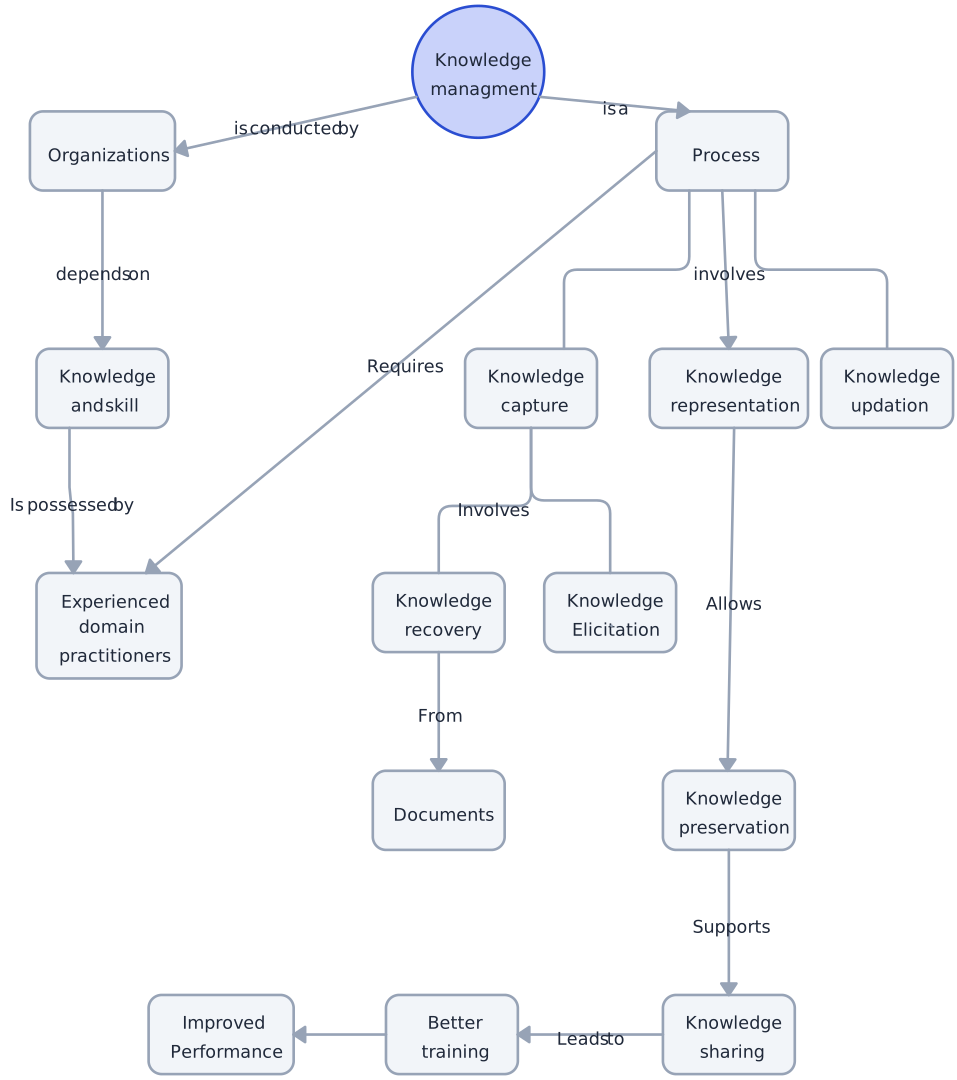

Managing these knowledge types requires more than storing files. Teams need a repeatable way to identify useful knowledge, capture the context around it, decide who can access it, and assign an owner who reviews and updates it. Mapping where knowledge is created, transferred, and used can reveal gaps at departmental handoffs and points where critical context is lost.
As processes, policies, systems, and roles change, the knowledge connected to them must change as well. Treating process documentation as a maintained operational reference helps prevent employees from relying on obsolete instructions or disconnected versions.
Key Steps in the Knowledge Management Process
Knowledge management models group lifecycle stages in different ways. Some use five broad stages—discovery, capture, curation, delivery, and optimization—while this guide uses seven more detailed steps to separate creation, organization, storage, sharing, and utilization. Whichever model an organization adopts, each stage should have defined ownership, access rules, review criteria, and a clear connection to the work the knowledge supports.
1. Knowledge Creation
The process begins with knowledge generation, where new insights, ideas, and expertise are developed through research, experience, and innovation. Organizations foster knowledge creation by encouraging collaboration, brainstorming, and documentation of best practices. This phase also includes learning from past experiences, industry trends, and customer feedback to generate valuable intellectual capital.
2. Knowledge Capture
Once knowledge is created, it must be captured in a structured manner. This involves documenting explicit knowledge (such as manuals and reports), tacit knowledge (gained through experience), and implicit knowledge (which can be formalized from practice). Tools like concept maps, process diagrams, and Creately’s Process Mapping Software help organizations collect and document insights effectively.
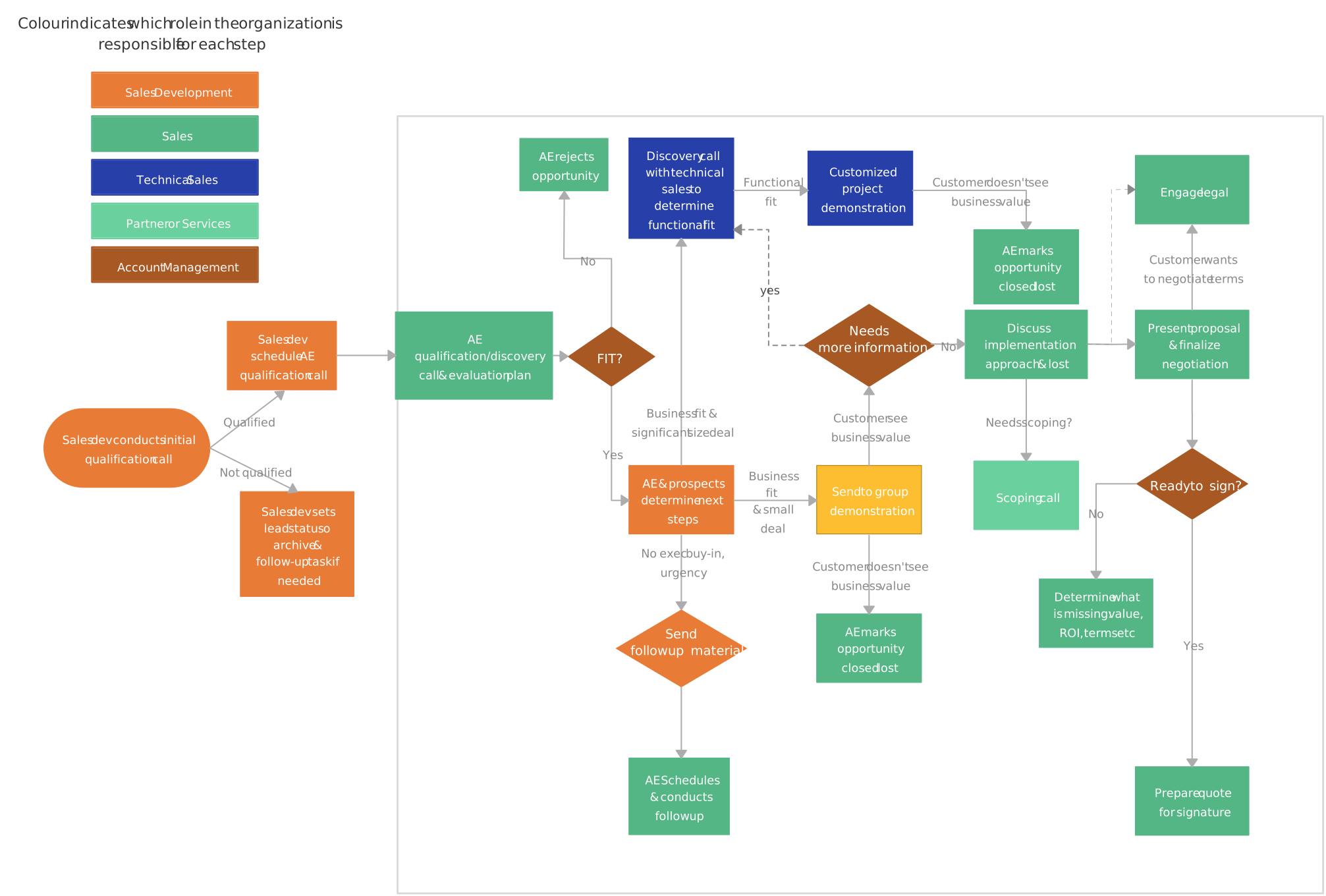
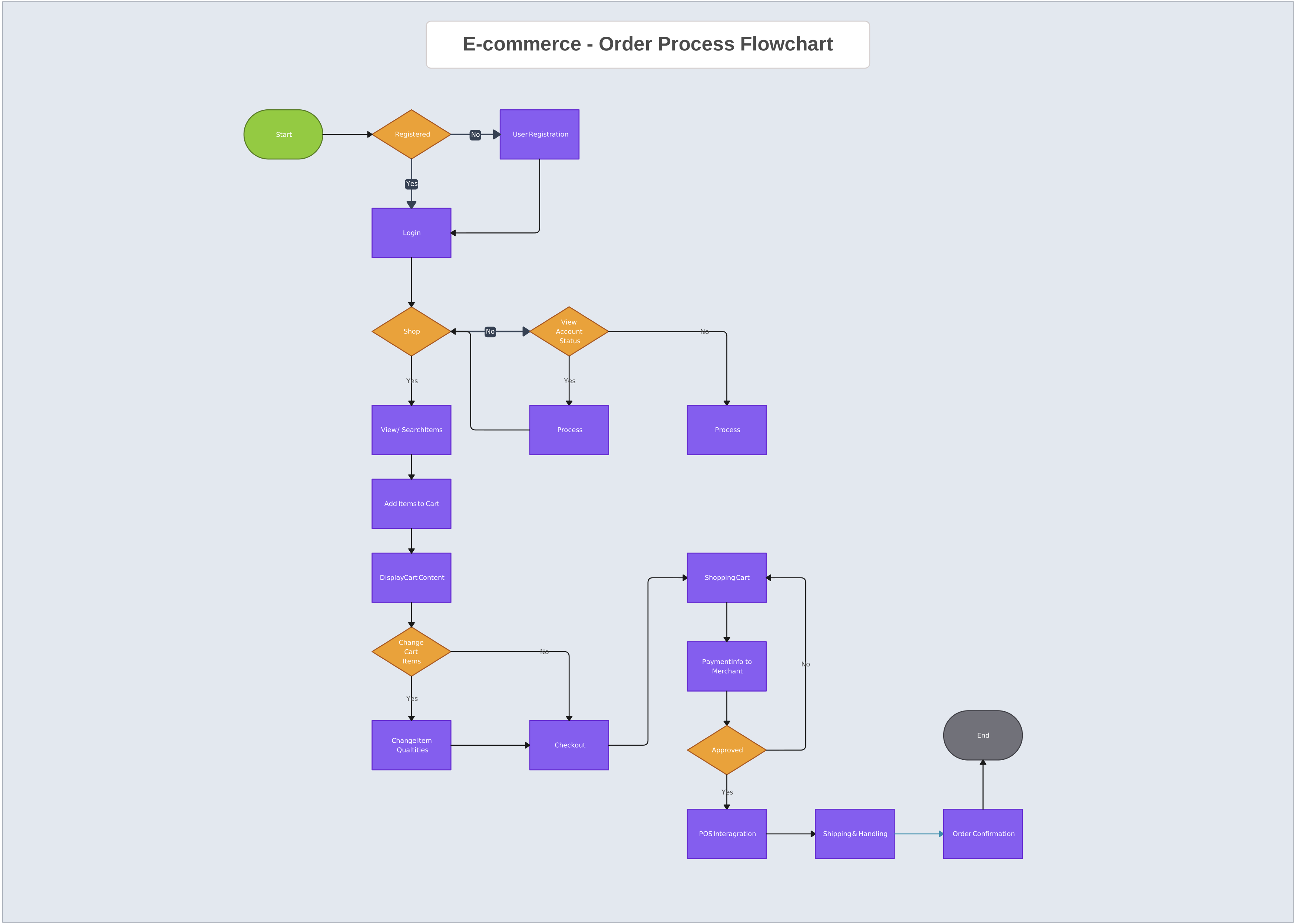
The template below illustrates how a company can capture and document its processes to include them in its knowledge management system.
3. Knowledge Organization
Captured knowledge must be structured and categorized for retrieval. This involves using consistent categories, tags, titles, formats, and relationships so people can search or browse effectively. Automated classification can assist with high-volume collections, but owners should validate important labels and access rules rather than assuming automated output is correct.
4. Knowledge Storage
Knowledge should be stored in an appropriate system of record with access controls, retention rules, backup arrangements, and a named owner. A knowledge base or document-management system may hold formal content, while a process map can connect employees to the relevant instructions, forms, decisions, systems, and subprocesses in their operational context. Avoid creating a new repository when a maintained source already exists; link to the authoritative source instead.
5. Knowledge Sharing
For knowledge to be useful, intended audiences must know that it exists, have appropriate access, and understand when to apply it. Internal knowledge bases, training, communities of practice, handover sessions, and process documentation support different forms of transfer. Document the handoffs at which knowledge is most likely to be lost and make the required context available at those points.
6. Knowledge Utilization
Stored and shared knowledge should be applied in daily operations, problem-solving, training, and decision-making. Measure use through signals relevant to the objective, such as search success, time to competency, repeated questions, error rates, process adherence, or resolution time. Access or page views alone do not show whether the knowledge improved an outcome.
7. Knowledge Evaluation & Optimization
Knowledge management requires continuous evaluation and maintenance. Set a review frequency based on risk and rate of change, collect feedback from users, and identify duplicate, unused, inaccurate, or outdated material. Owners should incorporate agreed changes, archive or redirect superseded content, and communicate the active version to affected teams.
Technology can support each stage, but tools do not replace governance. Define what knowledge is in scope, where authoritative content is stored, who owns it, how access is controlled, how feedback is reviewed, and how updates are approved within the organization’s chosen system. Visual process maps can show how knowledge moves through the operation and connect employees to the relevant context without claiming to replace a dedicated knowledge-management system.
Benefits of an Effective Knowledge Management Process
Implementing a comprehensive and efficient knowledge management process brings a multitude of advantages to organizations. By fostering an environment where information flows seamlessly across various departments, businesses can enhance their decision-making capabilities and drive innovation. Here are key benefits with examples and some templates:
1. Enhanced Decision-Making
A structured knowledge management process can help employees locate the evidence, previous decisions, and expert context relevant to a decision. For example, a consulting team can use a maintained knowledge base to reuse approved methods and lessons while still evaluating whether they apply to the current client and situation.
2. Reduced Training Costs
Effective knowledge management can support onboarding by connecting new employees to current procedures, role expectations, examples, and subject-matter experts. Track time to competency, repeated questions, and onboarding errors to determine whether the available knowledge is actually reducing training effort.
3. Innovative Culture
Knowledge sharing can help teams combine perspectives, avoid repeating failed experiments, and build on earlier research. The effect depends on psychological safety, appropriate recognition, useful documentation practices, and a review process that distinguishes validated knowledge from untested ideas.

4. Operational Efficiency
A well-implemented knowledge management process can reduce repeated searches, duplicate work, and avoidable procedural errors. Map where employees need information during the workflow, connect them to the authoritative source, and measure whether cycle time, rework, downtime, or service reliability improves.
5. Increased Customer Satisfaction
Connecting customer-facing teams to current product, policy, and troubleshooting knowledge can improve response consistency and resolution time. Review search failures, escalations, repeated contacts, and customer feedback to identify where the knowledge or the underlying service process needs improvement.
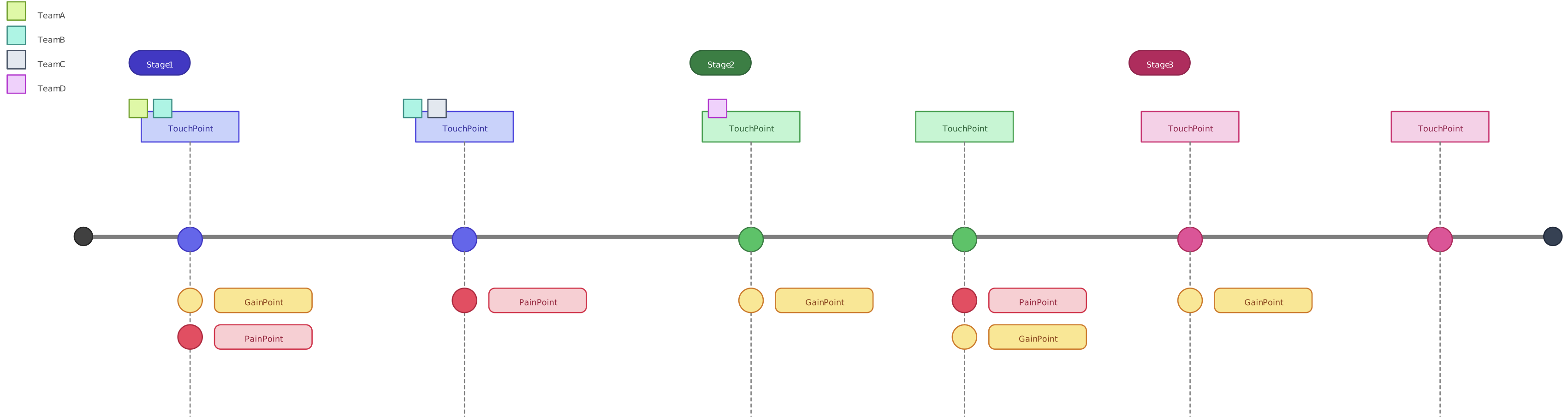
These benefits are not automatic. Establish a baseline, choose measures linked to the original problem, and review results after implementation. This makes it possible to distinguish a genuinely useful knowledge-management improvement from a larger collection of content that employees still cannot find or trust.
Helpful Resources
Explore various modern visual documentation techniques and how Creately can enhance your visual documentation efforts.
Explore how a synergy of visual documentation and collaboration tools can help convey information more effectively and efficiently.
Discover how to create effective process documentation that helps teams carry out a business process consistently.
Capture and organize all the information necessary to properly execute a business process within your organization.
Best Practices for Implementing the Knowledge Management Process
Implementing a knowledge management process effectively requires a detailed approach that aligns with organizational goals and integrates seamlessly into daily operations. By following some best practices, businesses can harness the full potential of their knowledge management systems, ensuring a smooth transition and continual benefit realization.
1. Set Clear Goals
Establishing precise objectives at the outset provides direction and focus for the knowledge management process. Whether aiming to reduce onboarding time, improve customer interactions, or foster innovation, setting measurable goals helps in evaluating success and guiding future improvements.
2. Foster a Culture of Knowledge Sharing
Creating an environment that encourages open communication and collaboration is vital. Engage employees at all levels to actively participate in the knowledge-sharing culture, tapping into diverse skills and insights. Recognizing and rewarding contributions can motivate teams to share knowledge more openly.
3. Select the Right Knowledge Management Tools
Choose tools according to the knowledge type, audience, security and retention requirements, existing systems, search needs, and maintenance workflow. Creately can support the visual process-documentation layer with process maps, connected context, and real-time collaboration, while the organization’s designated knowledge or document system remains the authoritative source where required.
4. Continuous Improvement and Adaptation
Set a review cadence and make ownership visible. Users should be able to flag unclear or outdated content, reviewers should discuss the feedback in context, and the accountable owner should incorporate agreed updates, record the active version, and communicate material changes.
5. Engage Stakeholders at All Levels
For a holistic knowledge management process, involving representatives from various departments ensures that multiple perspectives are considered. This approach fosters inclusivity and alignment with the diverse needs of the organization, creating a more robust system.
Together, these practices connect knowledge governance with daily operations. Process maps can clarify where knowledge is created, reviewed, transferred, and used; ownership and a defined maintenance workflow help keep that operational context current.
Knowledge Management: Capturing Knowledge Using Creately
Creately Process helps teams document operational knowledge in the context of the workflow where people use it. Teams can connect maps, notes, links, files, screenshots, and structured process properties, while retaining authoritative records in the appropriate source system.
Visual Documentation for Knowledge Retention
One of the most effective ways to capture knowledge is through visual documentation. Instead of relying solely on text-based notes, teams can create structured diagrams, workflows, and visual frameworks that make information easier to understand and retrieve. With Creately, organizations can build connected process maps and shared visual documentation that keep critical knowledge, ownership, and supporting context accessible beside the workflows where teams use it.
Using Visual Tools to Capture Knowledge in Creately
Creately’s process documentation features make knowledge capture more structured and easier to maintain. Teams can organize related process diagrams hierarchically, link parent processes to subprocesses, assign owners, and attach notes, documents, systems, and other reference material to the steps where people need it.
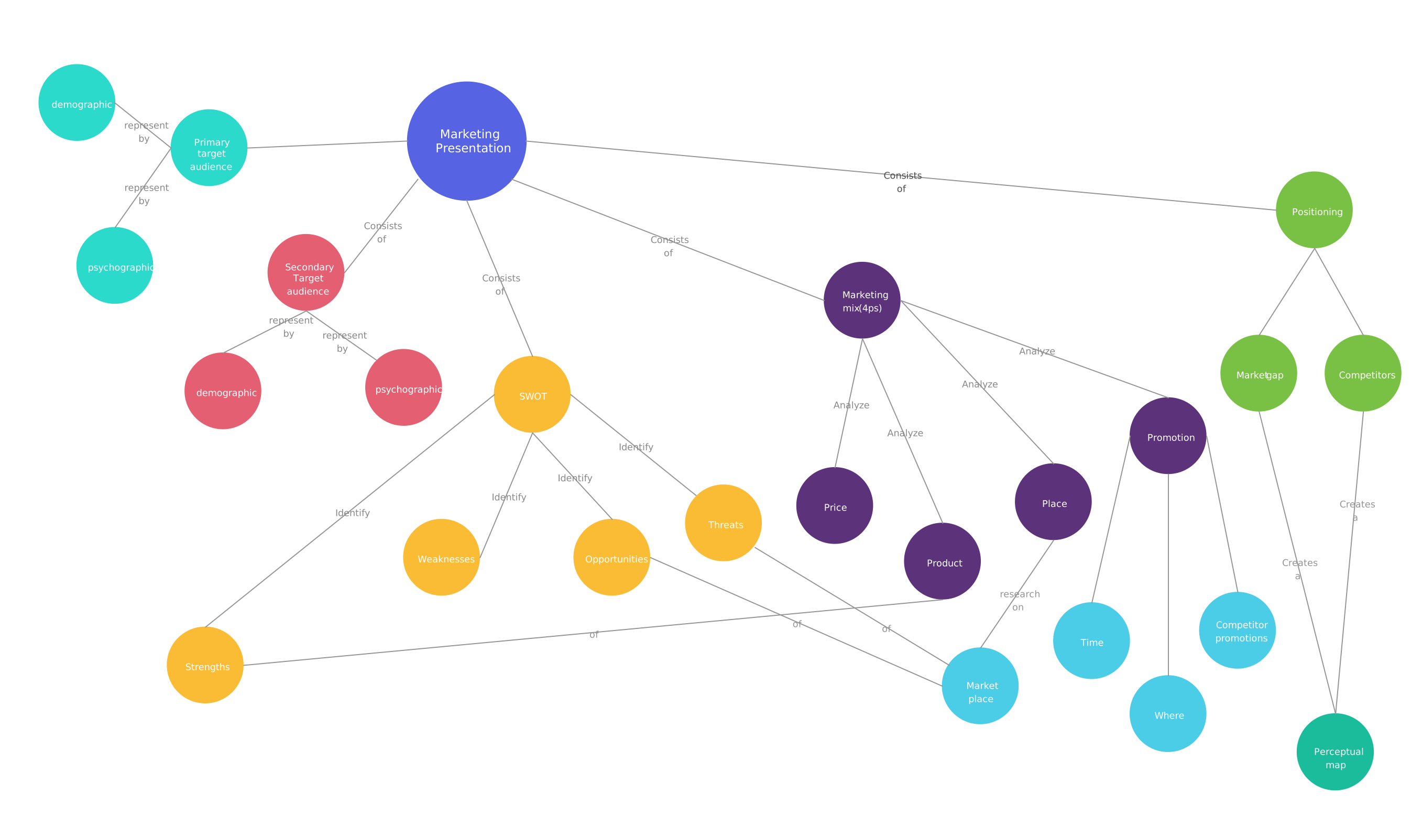
Concept Maps
Concept maps are powerful tools for capturing relationships between ideas, visually illustrating how different pieces of knowledge connect. By organizing information hierarchically, they provide a structured way to represent complex topics, making them ideal for brainstorming sessions, educational materials, and strategic planning. In knowledge management, concept maps help teams visualize workflows, clarify dependencies, and establish links between key concepts, ensuring that valuable insights are structured and easy to retrieve.
Flowcharts
Flowcharts document step-by-step processes, breaking down workflows into a series of structured actions to improve clarity and efficiency. By visually mapping out tasks, flowcharts help organizations standardize procedures, enhance decision-making, and create easily digestible training materials. They are particularly useful for identifying process bottlenecks, optimizing operations, and ensuring consistency across teams. With flowcharts, businesses can simplify complex procedures, making them easier to understand, execute, and refine.

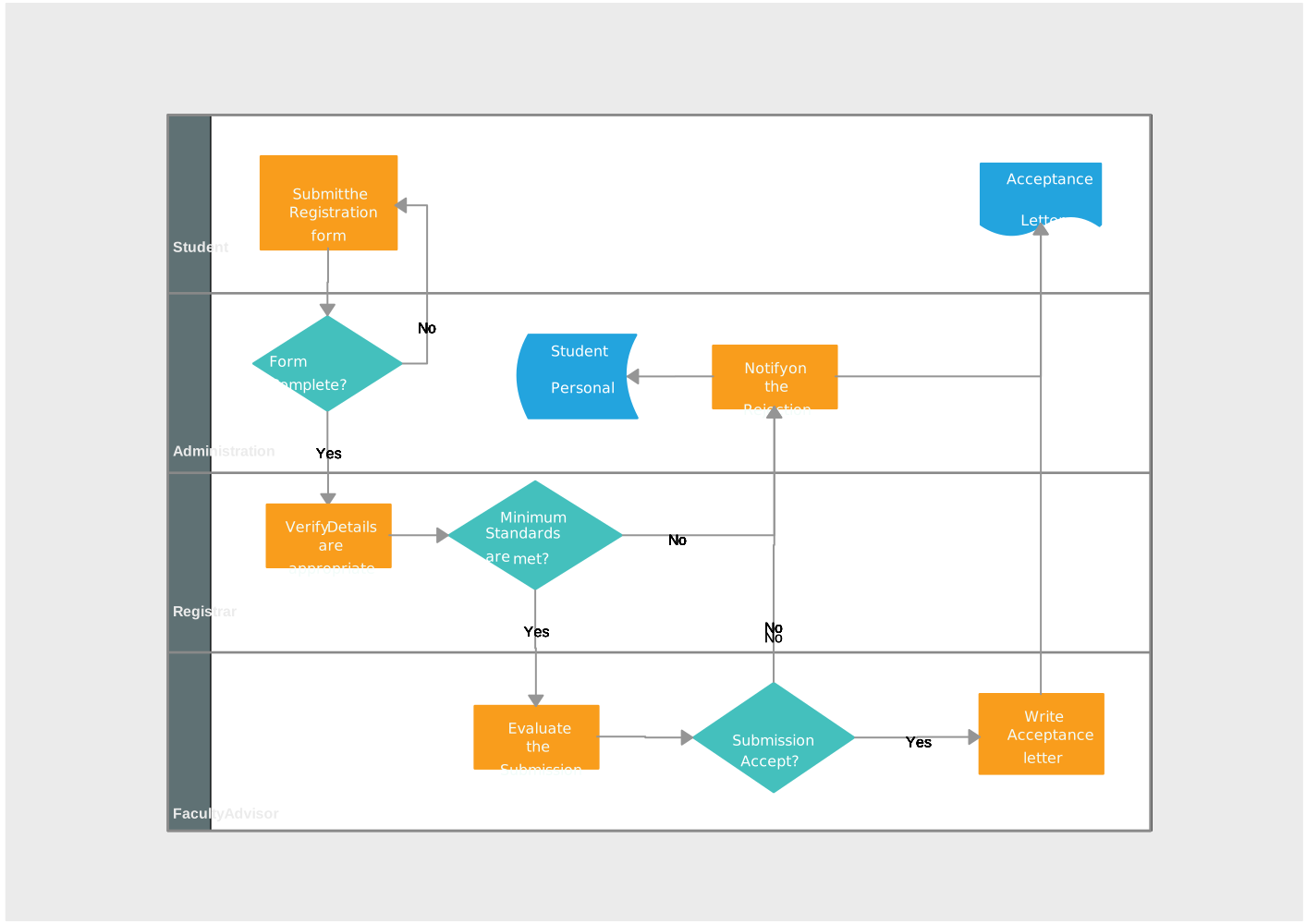
Process Mapping
Process mapping provides a detailed visualization of how tasks and activities flow within a business process, offering a clear view of inputs, outputs, and decision points. This technique helps organizations identify inefficiencies, streamline operations, and improve overall productivity. By mapping out processes, teams can uncover redundancies, optimize resource allocation, and ensure alignment between departments. Process maps serve as a valuable reference for training, compliance, and continuous process improvement.
Fishbone Diagrams (Ishikawa Diagrams)
Fishbone diagrams, also known as Ishikawa diagrams, are problem-solving tools designed to identify the root causes of an issue by categorizing contributing factors. By visually organizing potential causes into structured branches, teams can analyze problems systematically and develop effective solutions. These diagrams are especially useful in quality management, troubleshooting, and continuous improvement efforts, helping organizations pinpoint areas for enhancement and drive data-driven decision-making.
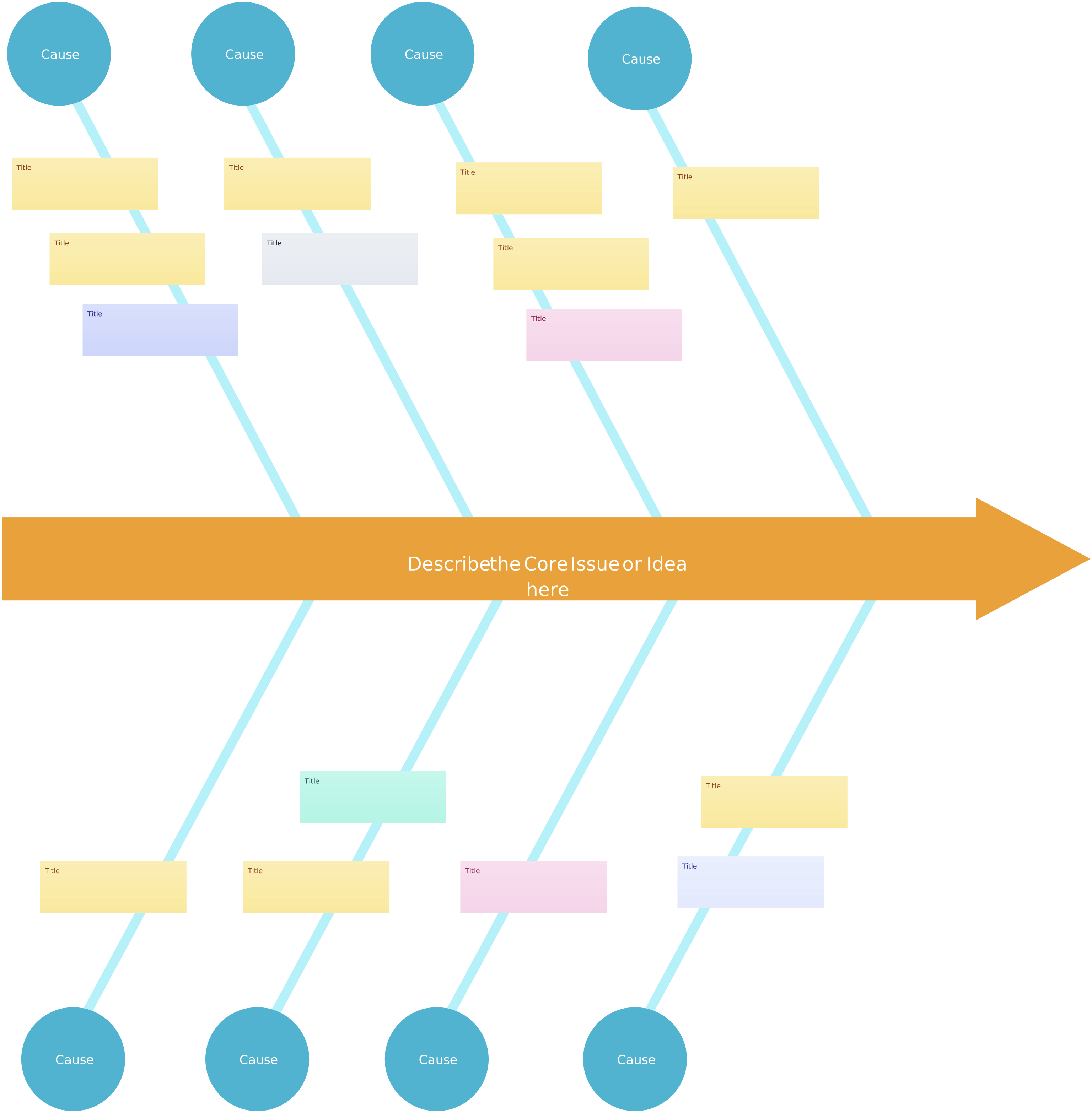
With Creately’s real-time collaboration features, teams can build and refine these diagrams together using shared editing, live cursors, and threaded comments with @mentions. Templates, automatic layout, structured process properties, and linked diagrams help keep operational knowledge connected as processes change. Stakeholders can leave feedback on the relevant diagram context, and the process owner can incorporate agreed updates into the maintained version without implying a formal approval workflow.
Conclusion
An effective knowledge management process connects creation, capture, organization, storage, sharing, utilization, and ongoing evaluation. Clear ownership, appropriate access, contextual handoffs, user feedback, and scheduled maintenance help teams find and trust the knowledge they need.
Creately’s process mapping software can document how operational knowledge moves through a process and keep notes, references, structured properties, comments, and linked subprocesses connected to that workflow. Use it alongside the organization’s appropriate systems of record rather than treating a process map as a replacement for knowledge governance.
FAQs About Knowledge Management Process
What is the difference between explicit, implicit, and tacit knowledge?
Why is the knowledge management process important for organizations?
How do the key stages in the knowledge management cycle work?
What role does technology play in knowledge management?
How does Creately support the knowledge management process?
Resources:
Alavi, M. and Leidner, D.E. (2001). Review: Knowledge Management and Knowledge Management Systems: Conceptual Foundations and Research Issues. MIS Quarterly, 25(1), pp.107–136. doi:https://doi.org/10.2307/3250961.
Gonzalez, R.V.D. and Martins, M.F. (2017). Knowledge Management Process: a theoretical-conceptual research. Gestão & Produção, [online] 24(2), pp.248–265. doi:https://doi.org/10.1590/0104-530x0893-15.
Raudeliūnienė, J., Davidavičienė, V. and Jakubavičius, A. (2018). Knowledge management process model. Entrepreneurship and Sustainability Issues, 5(3), pp.542–554. doi:https://doi.org/10.9770/jesi.2018.5.3(10).