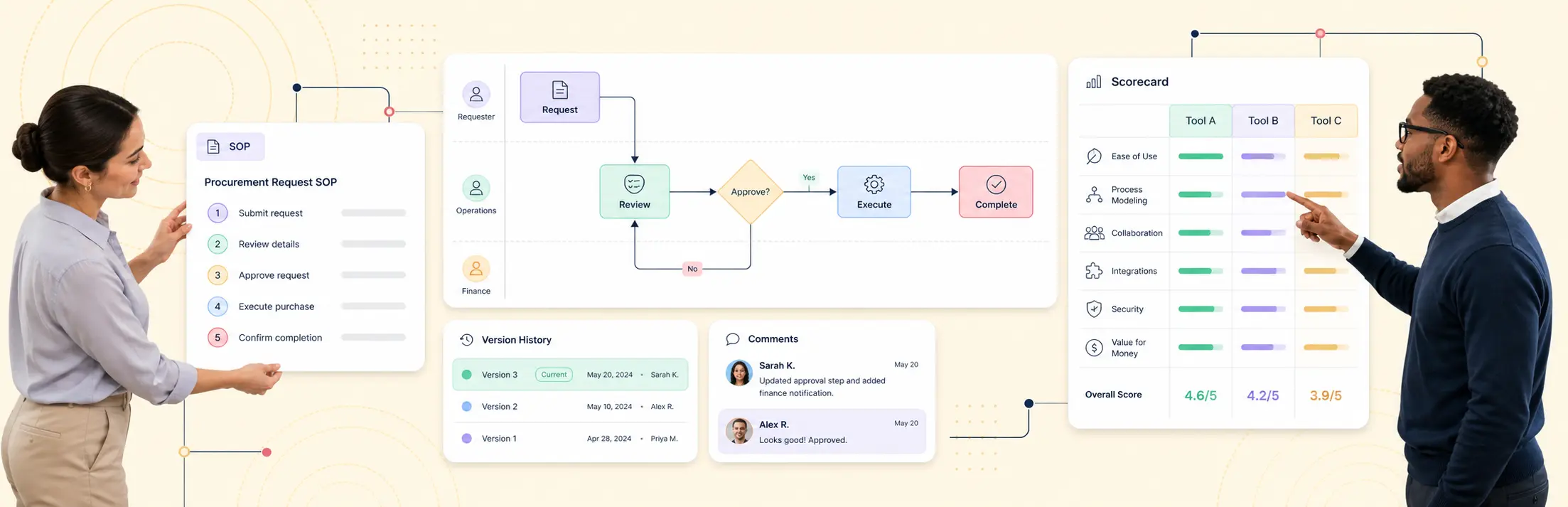
An approval process defines how a request, document, project proposal, purchase, or change is submitted, reviewed, decided, and recorded. When approval roles, criteria, and handoffs are unclear, work can remain in queues, move through unnecessary review layers, or return repeatedly for missing information.
This guide explains the stages of an approval process, common bottlenecks, the elements of an effective approval flow, strategies for complex decisions, and best practices for approvals that require clear accountability and evidence.
What is an Approval Process?
An approval process is a defined sequence for evaluating a request and recording whether it is approved, rejected, returned for revision, or escalated. It identifies who can make each decision, what information they need, which criteria apply, how exceptions are handled, and what happens after the decision.
The approval process typically consists of the following stages:
Submission: The requester provides the required information, supporting material, desired outcome, and deadline.
Triage and validation: The request is checked for completeness, assigned to the correct route, and returned promptly if essential information is missing.
Review: The authorized approver evaluates the request against documented business, budget, quality, risk, or compliance criteria.
Decision: The approver approves, rejects, or returns the request for specific revisions. Conditional or threshold-based requests may follow a different route or require additional authority.
Revision and resubmission: The requester addresses feedback and resubmits the work with a clear record of what changed.
Escalation: Overdue, disputed, high-risk, or out-of-policy requests move to a named escalation owner or higher approval level.
Completion and recordkeeping: The decision is communicated, the approved work proceeds, and the required decision context is retained according to organizational policy.
Approval Process Templates
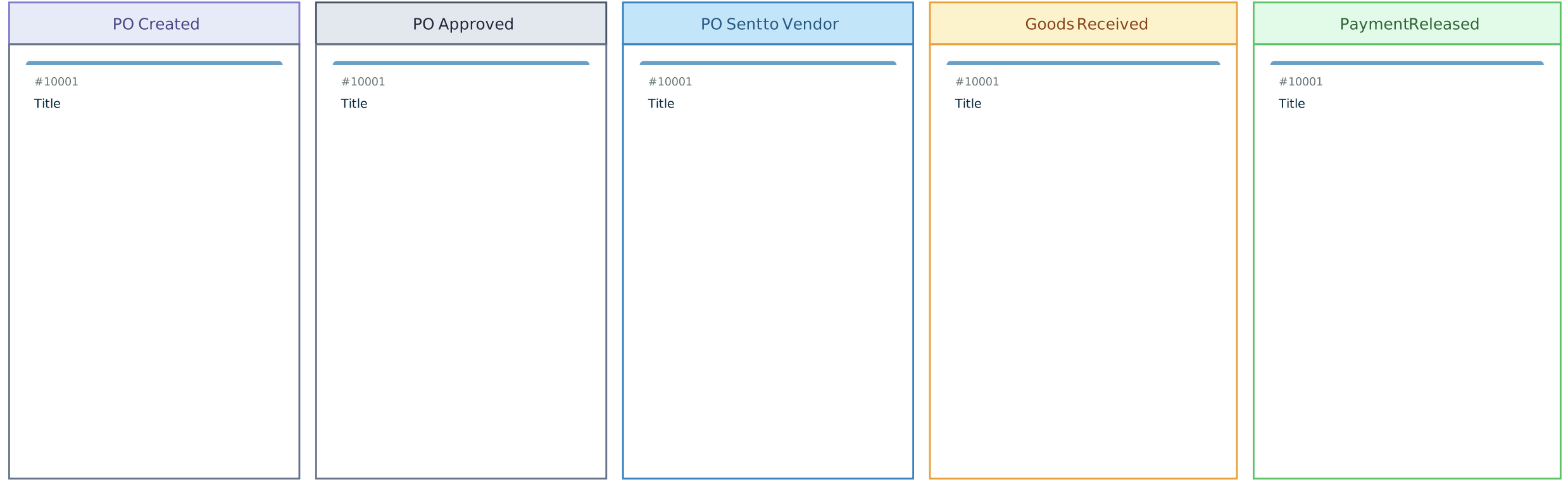

Use this template to document purchase-order approval thresholds, decision owners, exception routes, and the handoffs between requesters, procurement, budget owners, and accounts payable. The diagram represents how approvals should flow; a procurement or ERP system executes the transaction and records the official approval event.
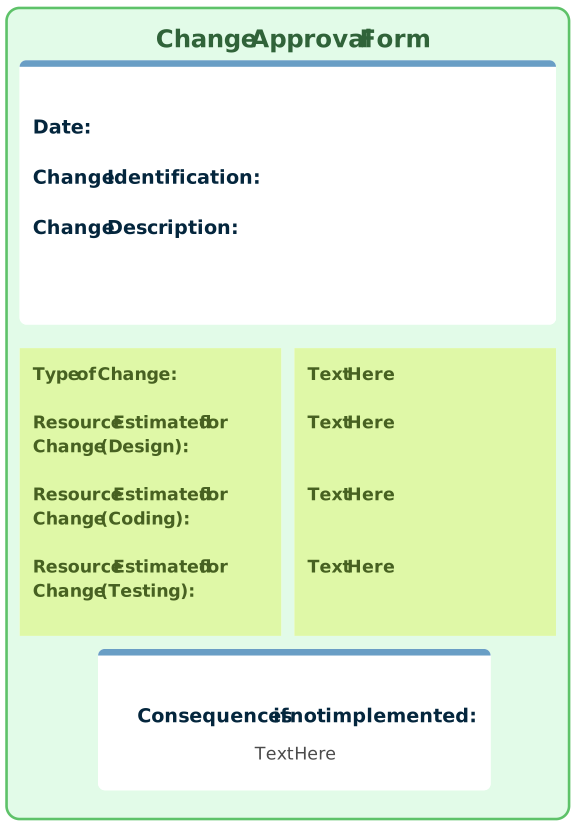
Use this template to define how a proposed software change is assessed, which technical or business criteria apply, who can authorize the change, and where rejected or high-risk requests are routed.
Why is an Efficient Approval Process Important?
Saves time and resources: An efficient approval process reduces the number of revisions, resubmissions, and delays that can occur in a poorly managed approval process. This saves time and resources for both the creator or requester and the approver or approvers.
Improves quality and accuracy: A streamlined approval process gives reviewers complete information and consistent decision criteria. This reduces avoidable errors, contradictory feedback, and repeated rework.
Enhances collaboration and communication: It fosters collaboration and communication between the creator or requester and the approver or approvers. This enhances the understanding, alignment, and feedback between them and improves the outcome of the work.
Supports timely, accountable decisions: Clear ownership, response targets, and escalation paths reduce waiting time without removing necessary controls. Teams can see where decisions stall and address the underlying constraint.
Common Challenges in Approval Processes
Many organizations struggle with managing their approval processes effectively. Some of the common challenges that they face are:
Lack of clarity: There is no clear definition of who is responsible for approving what, when, how, and why. There are no clear criteria, guidelines, or standards for approving work. There are no clear expectations or goals for the work.
Lack of communication: There is no regular communication between the creator or requester and the approver or approvers. There is no feedback loop or mechanism for providing comments, suggestions, or revisions. There is no transparency or visibility into the status of the work.
Lack of consistency: Submission requirements, decision criteria, approval thresholds, and exception handling vary without a clear business reason. Requesters cannot predict which route applies or what evidence an approver needs.
Lack of efficiency: Every request follows the same review path regardless of value or risk, too many people approve the same decision, approvers receive incomplete submissions, or no escalation path exists for overdue work.
Approval Process Flow
To overcome these challenges and streamline your approval process, you need to have a clear and consistent approval process flow that defines the following elements:
Roles and responsibilities: Who are the creators, requesters, approvers, and end-users involved in the approval process? What are their roles and responsibilities?
Criteria and standards: What are the criteria and standards for approving work? What are the quality, accuracy, compliance, and security requirements for the work?
Decision routes and thresholds: Which requests can be approved at each authority level? What conditions trigger parallel review, additional approval, rejection, revision, or escalation?
Stages and steps: What are the stages and steps of the approval process? What are the actions, tasks, and deliverables for each stage and step?
Tools and systems: What are the tools and systems that support the approval process? What are the platforms, applications, or software that facilitate the submission, review, revision, resubmission, approval, and completion of the work?
Metrics and measures: Track end-to-end approval time, time waiting at each stage, first-pass approval rate, revision cycles, overdue requests, exception volume, and the percentage of decisions completed within the expected response time.
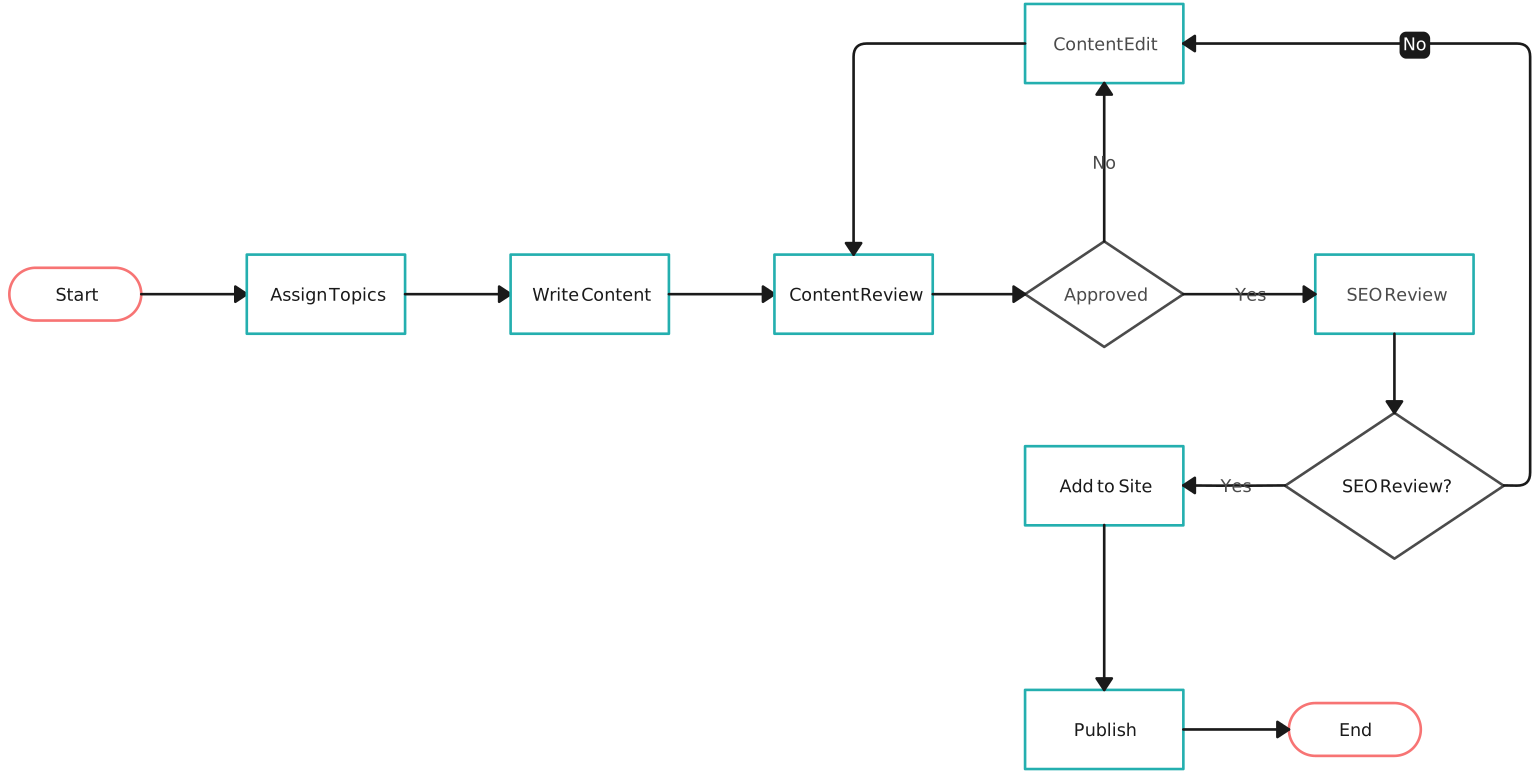
With Creately’s process mapping software, teams can document an approval flow with flowchart or BPMN notation and add structured details such as owner, duration, status, SLA, trigger type, systems, tags, and linked subprocesses to relevant steps. Real-time editing, live cursors, and threaded comments with @mentions support collaborative review of the process design. Creately documents the approval workflow and its context; it does not execute approvals, send automated reminders, or provide a formal electronic-signature decision record.
Strategies to Manage Complex Approval Processes
Sometimes, you may have to deal with complex approval processes that involve multiple approvers, multiple documents, multiple revisions, or multiple dependencies. In such cases, you need to apply some strategies to manage your approval process effectively. Here are some of them:
Route by value and risk: Avoid sending every request through the same chain. Define approval thresholds and routes based on factors such as value, risk, business impact, or regulatory requirements, while preserving required controls.
Set complete submission requirements: Tell requesters which information, evidence, and decisions are needed before review begins. Validate completeness at intake so approvers do not spend time chasing missing context.
Design parallel and conditional reviews carefully: Run independent reviews in parallel when policy permits, but define whether all responses are required and how conflicting decisions are resolved. Use conditional routes to avoid unnecessary review layers.
Define escalation and delegation: Name the person responsible for overdue requests, set expected response times, and document how approval authority is delegated during absences. Review recurring escalations as evidence of a process-design or capacity problem.
Automate only after simplifying the flow: A workflow platform may route requests, enforce required fields, send reminders, or record decisions. First remove unnecessary steps and clarify the decision rules; automating a poorly designed process preserves its delays at greater scale.
Best Practices for Formal Approvals
Sometimes, you may have to deal with formal approvals that require legal, regulatory, or contractual compliance. In such cases, you need to follow some best practices to ensure that your approval process is valid, reliable, and secure. Here are some of them:
Document authority and decision rules: Define who can approve each request type and threshold, which criteria apply, who can delegate authority, and how exceptions are handled. Keep the process documentation aligned with the governing policy.
Use an appropriate system of record: Formal approvals may require authenticated users, timestamps, decision history, signatures, retention controls, or an audit trail. Select a system that meets the organization’s legal, regulatory, contractual, security, and records-management requirements.
Retain the decision context: Preserve the submitted version, supporting evidence, approver identity, decision, date, conditions, revisions, and final outcome for the required retention period. Restrict access according to the sensitivity of the information.
Review the control periodically: Confirm that approval thresholds, named roles, systems, and retention rules remain current. Process owners should incorporate agreed changes and communicate the active version to affected teams.
Conclusion
An effective approval process balances speed with appropriate control. It gives requesters clear submission requirements, routes work to authorized decision-makers, defines objective criteria and escalation paths, and records the outcome in the appropriate system.
Start by mapping the current flow and measuring where requests wait, return for revision, or pass through unnecessary review layers. Redesign the process around risk-appropriate routes, accountable ownership, complete information, and clear handoffs. Then select automation that supports the agreed process rather than treating automation as the process design.
Maintain the map as living process documentation. Use stakeholder comments to review recurring issues, have the process owner incorporate agreed updates, and keep the current version, status, ownership, and linked subprocess context visible to the teams that rely on it.