


Organizational change affects people, processes, technology, and day-to-day responsibilities. The right change management tools help teams understand the current state, define the desired state, communicate the reason for change, and monitor adoption. This guide explains eight practical visual tools and established frameworks, when to use each one, and how to keep change plans connected to the people and processes they affect.
What is Change Management?
Change management is a structured approach to preparing, supporting, and enabling people to adopt changes in processes, systems, roles, or organizational direction. It complements project management: project management coordinates the technical delivery of a change, while change management focuses on understanding impacts, engaging stakeholders, building capability, addressing resistance, and sustaining adoption.
A change initiative should define the intended outcome, affected groups, ownership, communication and training needs, risks, feedback channels, and measures of adoption. No framework guarantees success, but a clear and adaptable approach helps teams identify barriers and respond to evidence as implementation progresses.
Change Management Tools
The term “change management tools” includes visual planning techniques, analysis methods, delivery tools, and structured models. They serve different purposes: a process map documents how work changes, a stakeholder analysis guides engagement, a Gantt chart schedules implementation work, and models such as ADKAR, Kotter’s 8-Step Process, and Lewin’s model provide lenses for managing adoption. Choose and combine them according to the scale, risk, people impact, and governance needs of the initiative.
1. Flowcharts and Process Maps
Flowcharts and process maps make steps, decisions, roles, systems, and handoffs visible. Map the current state to identify bottlenecks and change impacts, then create a future-state map to explain how work should operate after implementation. Use process mapping software to compare the two states, gather feedback from the people who perform the work, assign ownership, and keep supporting context connected to the relevant steps.

2. ADKAR Analysis
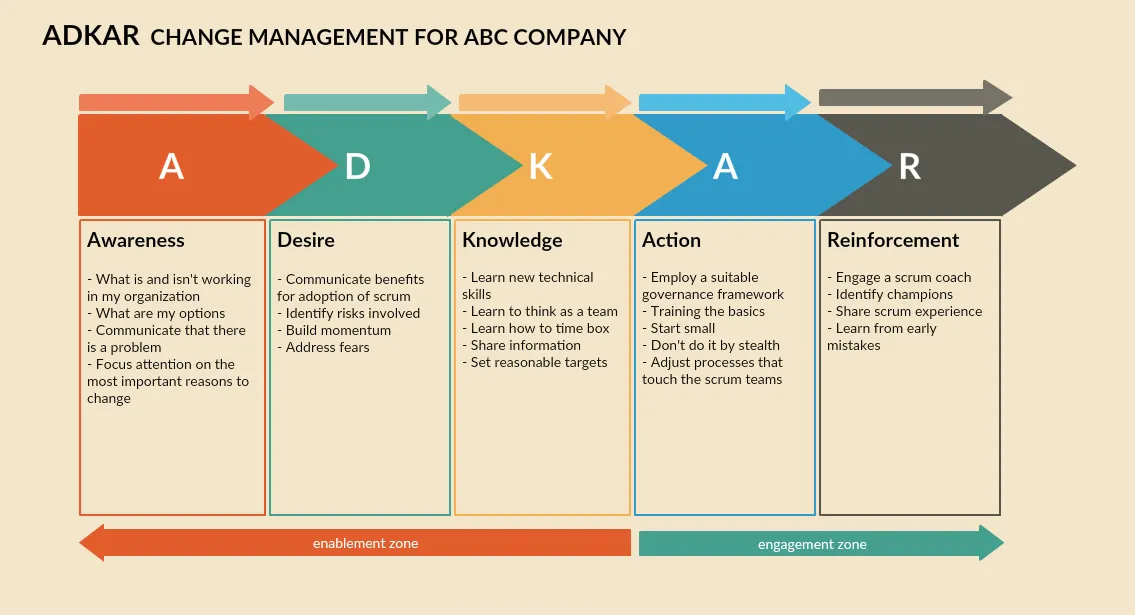
The Prosci ADKAR® Model focuses on five outcomes an individual needs to achieve for a change to succeed:
- Awareness: Understand why the change is needed.
- Desire: Choose to participate in and support the change.
- Knowledge: Learn how to change, including the required skills, behaviors, and processes.
- Ability: Put the required knowledge and skills into practice.
- Reinforcement: Sustain the change through feedback, recognition, accountability, and continued support.
Use ADKAR to identify where an individual or affected group is encountering a barrier. It is an individual-change model, so combine it with project, governance, communication, and organizational-change planning where appropriate.
3. Culture Mapping
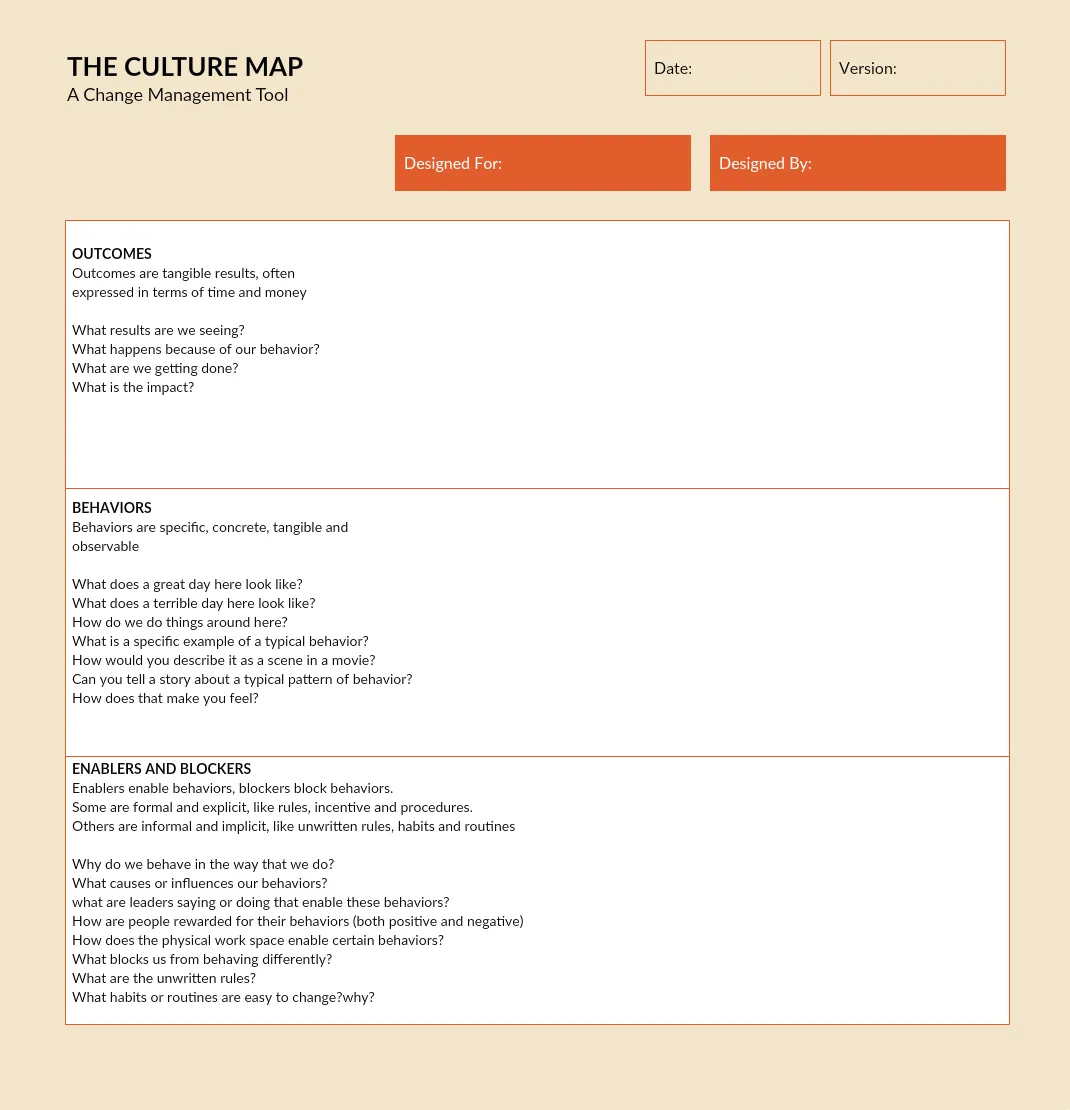
A culture map helps teams examine the behaviors, values, norms, and conditions that may support or obstruct a change. It should be based on evidence from representative groups rather than assumptions about the organization.
Step 1: Identify relevant groups - Identify teams, roles, locations, or communities that may experience the change differently. Select a representative range of participants rather than relying only on senior stakeholders.
Step 2: Gather evidence - Use interviews, workshops, observation, or surveys to understand current behaviors, incentives, blockers, and enabling conditions.
Step 3: Organize and validate the findings - Capture observed behaviors, stated values, enablers, blockers, and desired outcomes in a culture map. Review the map with participants, identify patterns, and avoid presenting individual opinions as organization-wide facts.
4. Force Field Analysis
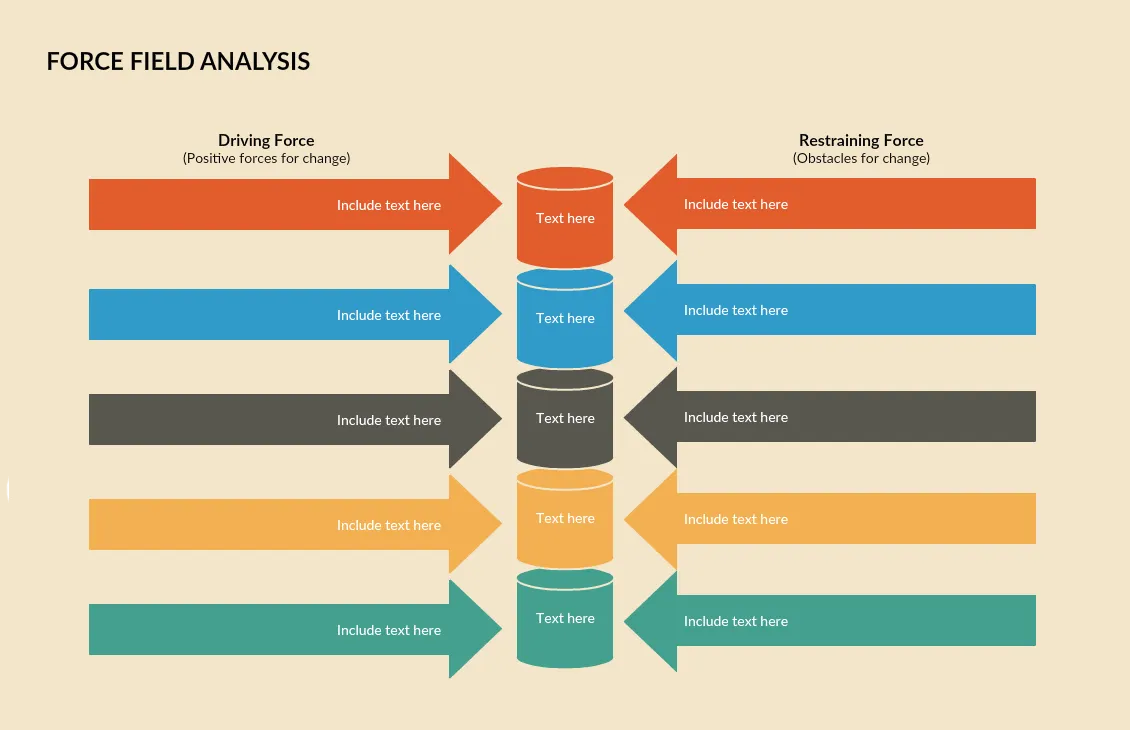
Force field analysis is a decision-support technique for identifying forces that support a proposed change and forces that restrain it. It helps teams discuss assumptions and possible interventions, but the ratings are judgments rather than objective proof.
Step 1: Define the proposed change - State the desired outcome and scope clearly.
Step 2: Identify driving forces - List internal and external factors that could help the change succeed, such as customer demand, leadership support, or available capability.
Step 3: Identify restraining forces - List barriers such as limited capacity, unclear incentives, process dependencies, skills gaps, or stakeholder concerns.
Step 4: Assess and respond - Estimate the relative influence of each force, validate the analysis with affected stakeholders, and decide which barriers to reduce or enabling forces to strengthen.
5. Stakeholder
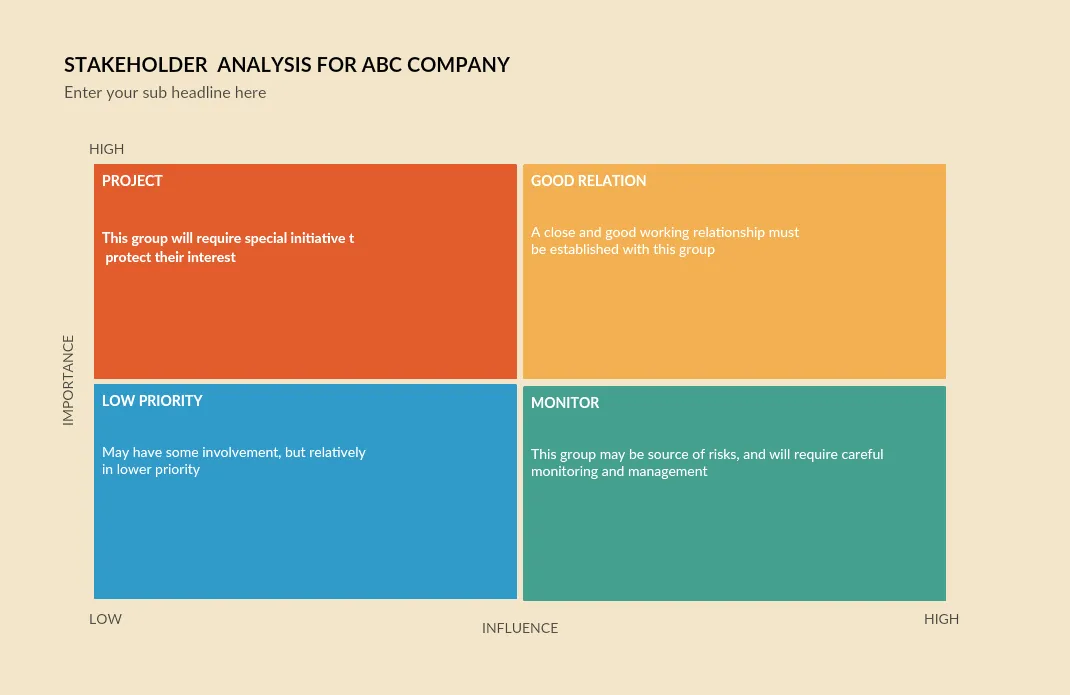
Stakeholder analysis identifies the people and groups who affect or are affected by a change. It helps teams understand interests, influence, likely impacts, concerns, and the level of engagement each group needs.
Step 1: Identify stakeholders - Include employees, managers, sponsors, customers, partners, regulators, and other groups affected by the initiative.
Step 2: Assess influence and impact - Evaluate each stakeholder’s influence over the change, how strongly the change affects them, their current position, and the information or support they need. Do not infer engagement solely from demographic characteristics.
Step 3: Prioritize engagement - Use a power-interest grid or a similar model as a starting point, then tailor communication, participation, training, and feedback activities to each group.
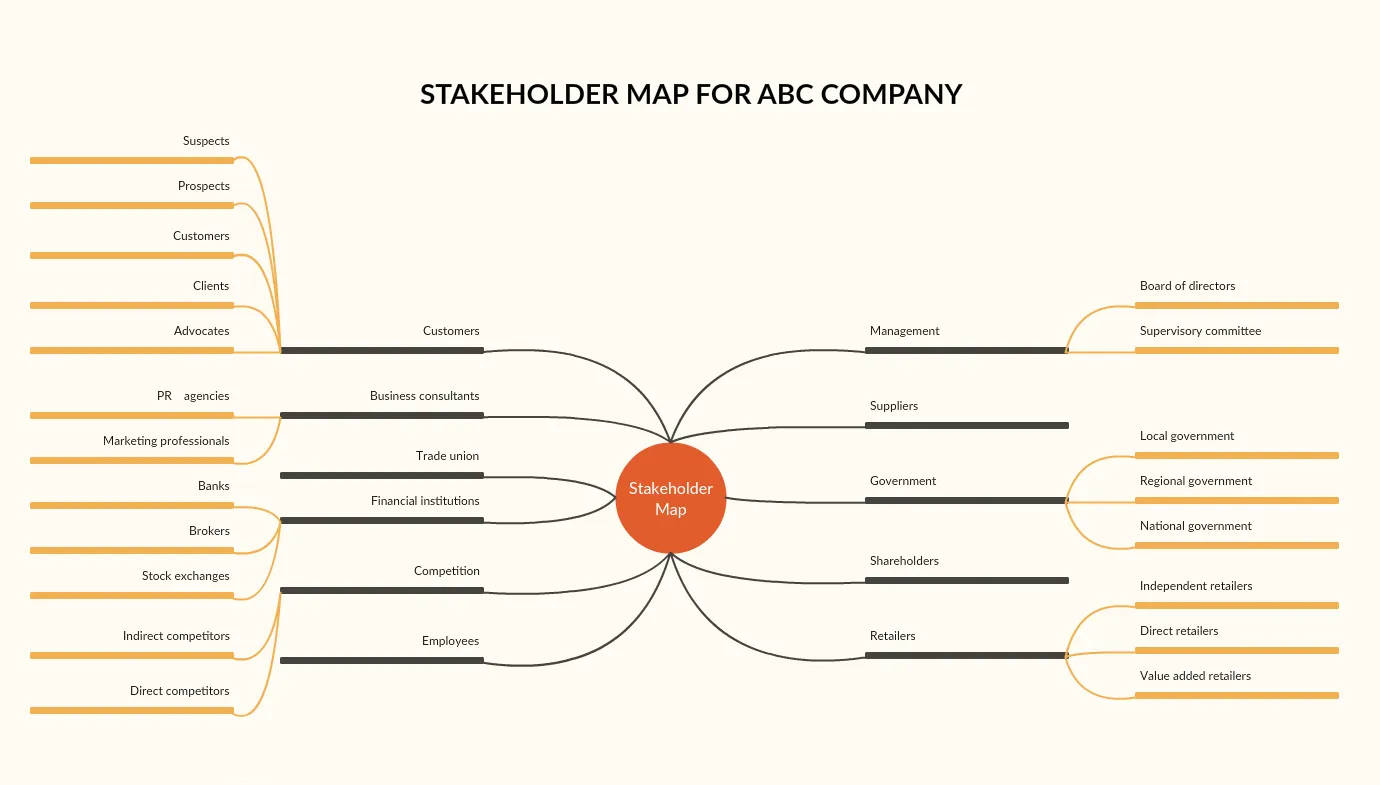
A stakeholder map can provide a second view of relationships, influence, and communication paths.
6. Kotter’s 8-Step Change Model
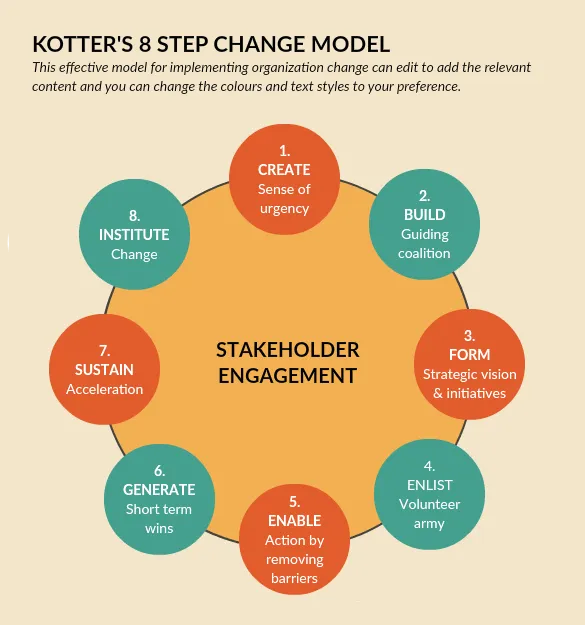
Kotter’s 8-Step Process is an organizational-change framework designed to build and sustain momentum:
- Create a sense of urgency - Help people understand the opportunity or need for change and why action matters now.
- Build a guiding coalition - Bring together a credible and committed group with the influence and expertise to guide the effort.
- Form a strategic vision and initiatives - Describe the future state and the coordinated initiatives that will make it achievable.
- Enlist a volunteer army - Engage a broad group of people who choose to contribute to the change.
- Enable action by removing barriers - Address structures, processes, skills gaps, or policies that prevent people from acting on the vision.
- Generate short-term wins - Define, achieve, and communicate meaningful early results.
- Sustain acceleration - Use credibility from early wins to address additional barriers and continue the transformation.
- Institute change - Embed new behaviors and practices in organizational systems and culture so they persist.
Treat these steps as mutually reinforcing activities rather than a checklist that guarantees success. Teams may revisit earlier steps as conditions change.
7. Lewin’s Change Model
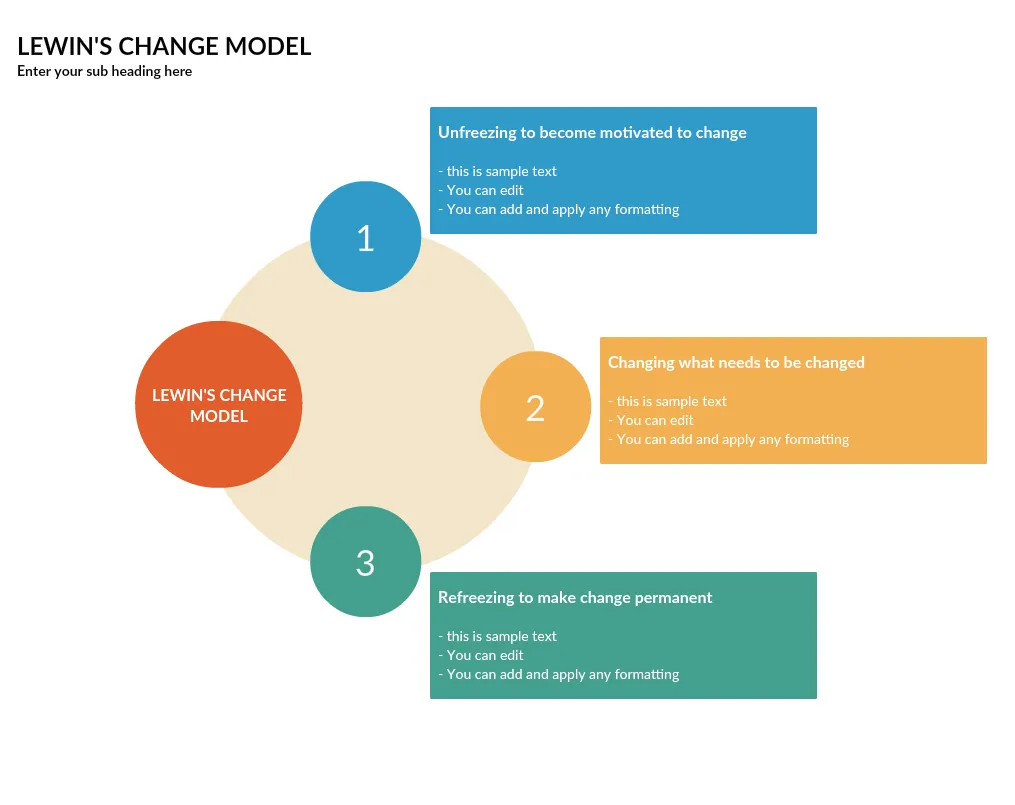
Lewin’s three-stage model provides a simple way to think about moving from an established state to a new one:
- Unfreeze - Build readiness by explaining the need for change, examining current assumptions and processes, and identifying forces that maintain the status quo.
- Change - Introduce and support new behaviors, processes, or systems through communication, participation, training, practice, and feedback.
- Refreeze - Stabilize the new way of working through updated processes, roles, measures, reinforcement, and documentation. In fast-changing environments, stabilization does not mean the process can never be revised.
8. Gantt Chart
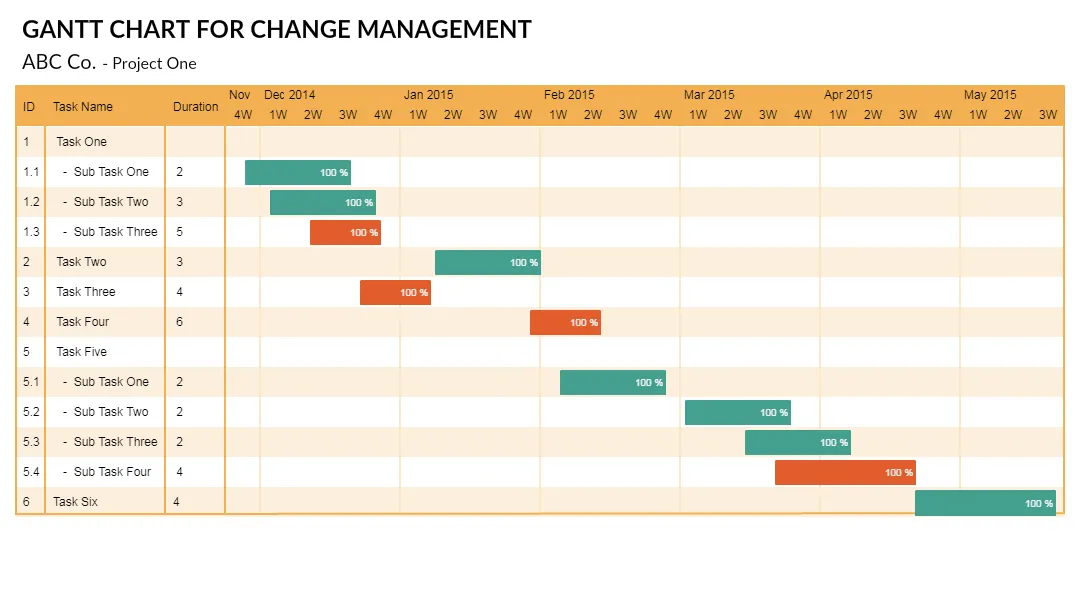
A Gantt chart schedules the implementation work behind a change initiative. It shows tasks, durations, dependencies, milestones, and owners, helping teams coordinate activities such as communications, training, pilots, rollout, and post-launch support.
Start by defining the scope and deliverables, break the work into manageable tasks, assign ownership, identify dependencies, and set realistic dates. Update the chart as assumptions or constraints change. A Gantt chart tracks delivery activity; combine it with adoption measures and stakeholder feedback to understand whether the change is taking hold.
Creately helps teams connect visual change-planning tools with the operational context needed to implement them. Teams can map current- and future-state processes, document roles and handoffs, and keep owners, notes, links, files, and structured details connected to relevant steps.
Real-time editing, comments, and @mentions allow affected stakeholders to review a map and provide feedback in context. The accountable owner can incorporate agreed updates, while linked diagrams can provide more detailed views of subprocesses or related workflows. These capabilities support collaborative review without implying a separate formal approval system.
Maintain the process map as living documentation after rollout. Assign an owner, review it at an agreed cadence, and update it when roles, systems, policies, or handoffs change. Explore Creately’s change management tools and templates or use its process mapping software to create a shared operational reference.


Dr. Chris
which of the following change management tools are designed to visualize your project’s development process?
Amanda
Great question! All these tools are helpful for visualizing your project’s development during change management, and you can create them easily with Creately’s ready-made templates:
Kanban boards - let you track tasks through each stage of change and spot bottlenecks quickly. Flowcharts and process maps - helps redesign workflows and clarify new processes. Gantt charts - keep your changes plan on schedule with clear timelines and dependencies. Roadmaps - align everyone on long-term change goals and priorities. Value stream maps - helps you identify and eliminate inefficiencies during transitions.