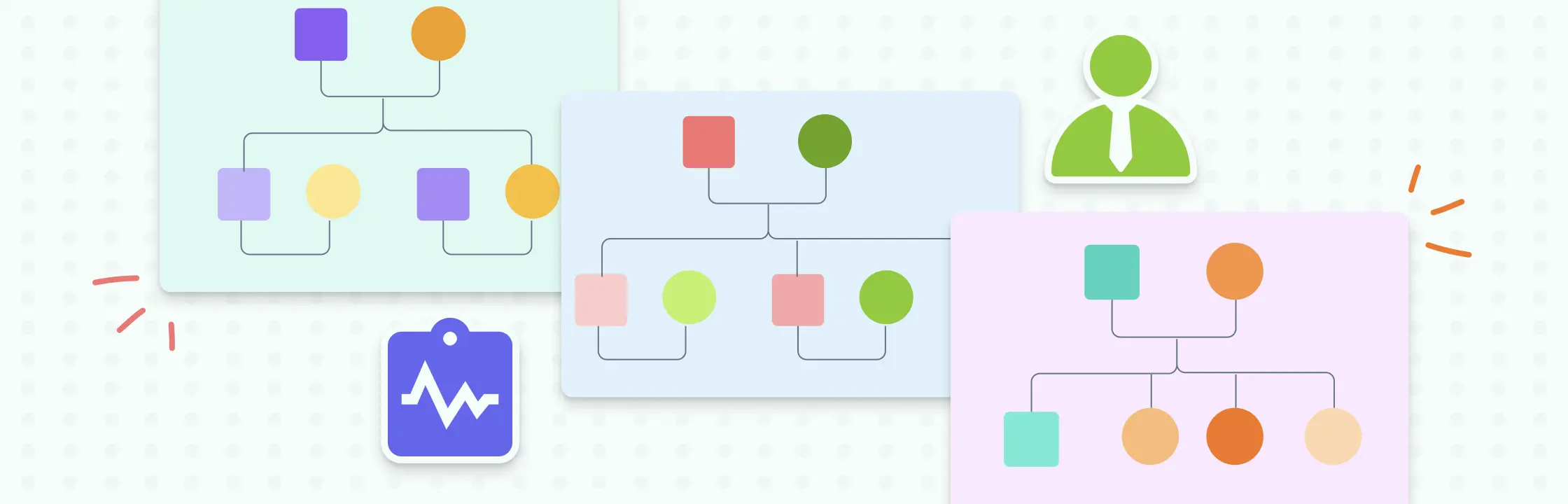
Discover how using a genogram in counseling helps therapists identify family patterns and emotional dynamics. This powerful tool supports deeper insights and more effective outcomes in client counseling sessions.
What Is a Genogram in Client Counseling?
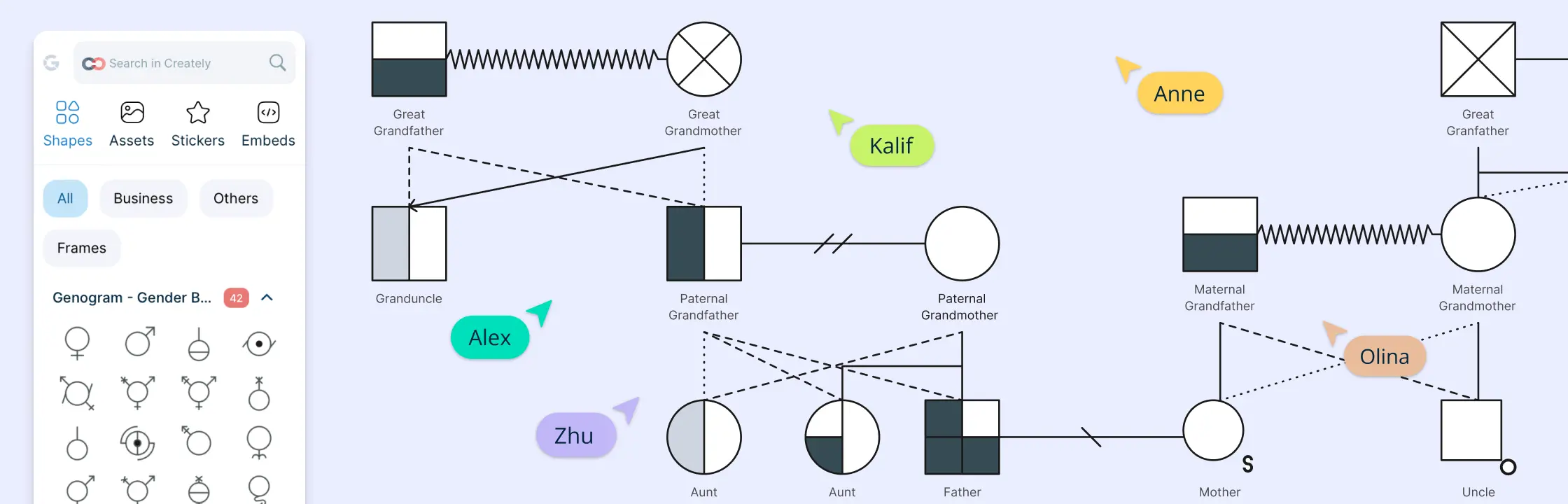
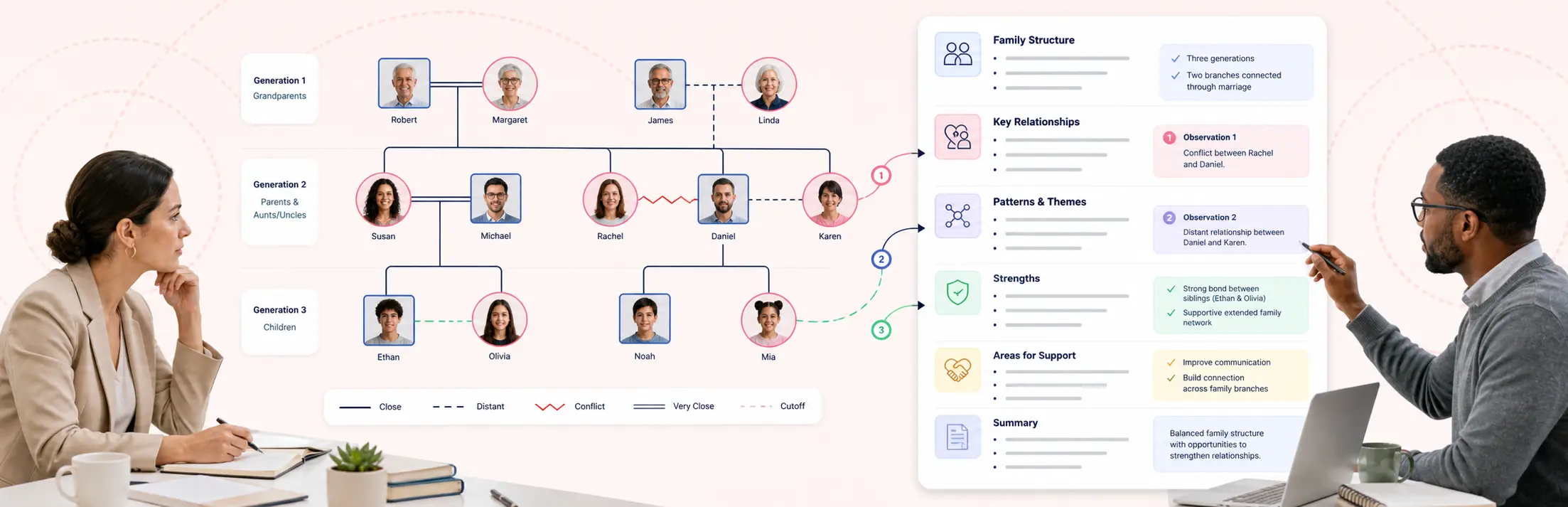
A genogram in client counseling is a visual representation of a client’s family history, similar to a family tree, but with added detail about relationships, emotional connections, and significant patterns across generations. It helps therapists understand how past family dynamics and experiences might be influencing the client’s current thoughts, feelings, and behaviors.
Read our comprehensive guide on how to make a genogram to explore its use cases and practical applications.
Genogram Template to Get Started
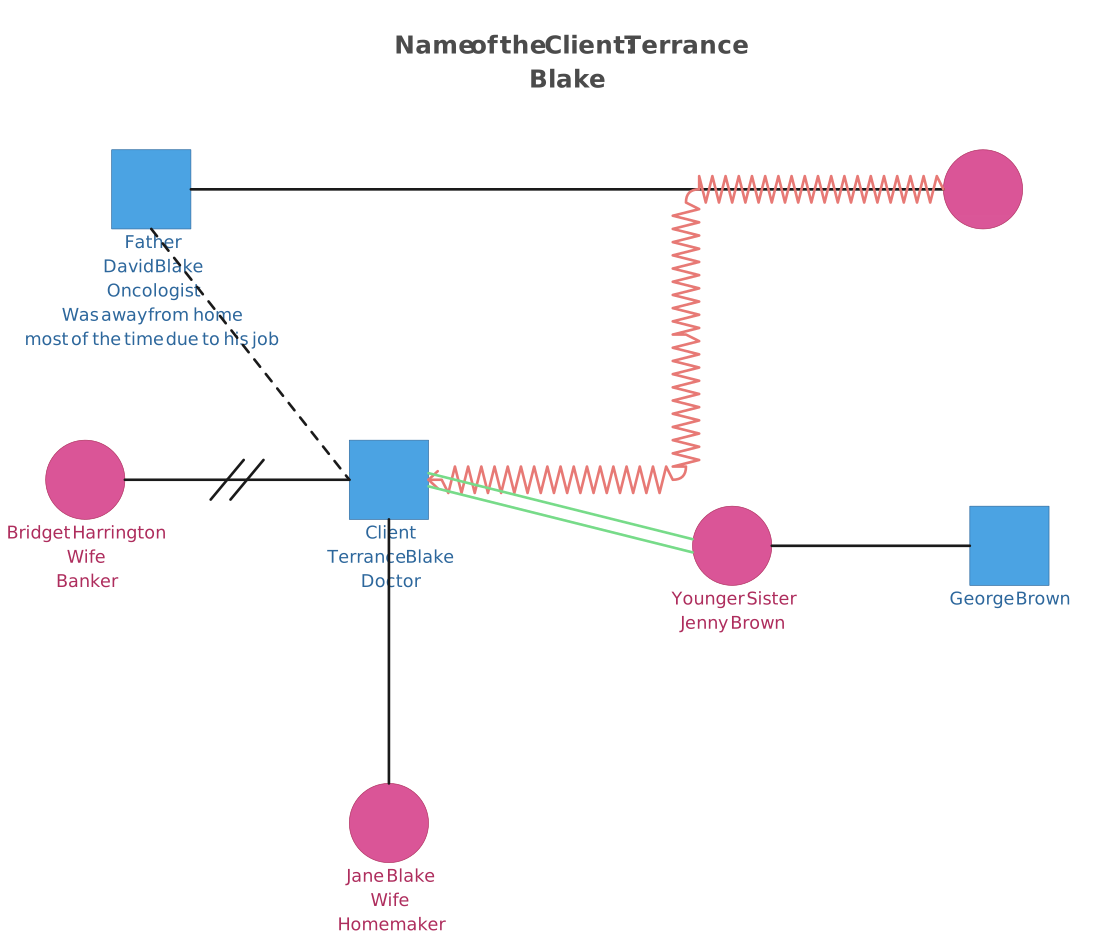

Using Genograms for Diagnostic Purposes
A key benefit of using genograms in client counseling is their ability to reveal intergenerational patterns, inherited traits, and family dynamics. These visual tools provide diagnostic insights into mental health issues, helping uncover emotional challenges and influences shaping the client’s current experiences.
How to Make a Genogram for Counseling
Creately helps counselors create genograms faster with AI-powered text-to-genogram generation, clinical relationship notation, structured fields, templates, and real-time collaboration. Instead of manually drawing every person and connection, counselors can start from client notes or a template, then refine the genogram during sessions to explore family history, emotional dynamics, and recurring patterns.
Step 1 - Gather client and family information
Collect detailed information from the client, including family members, relationships, significant events, emotional dynamics, health history, trauma, conflict, support systems, and recurring behavioral patterns. Create a safe space where the client feels comfortable sharing personal and family history.
Step 2 - Generate a first draft or start with a template
Use Creately’s AI-powered text-to-genogram generation to turn intake notes, case summaries, or family descriptions into a starter genogram. You can also begin with a counseling genogram template and customize it for the client’s family structure and counseling goals.
Step 3 - Build and refine the family structure
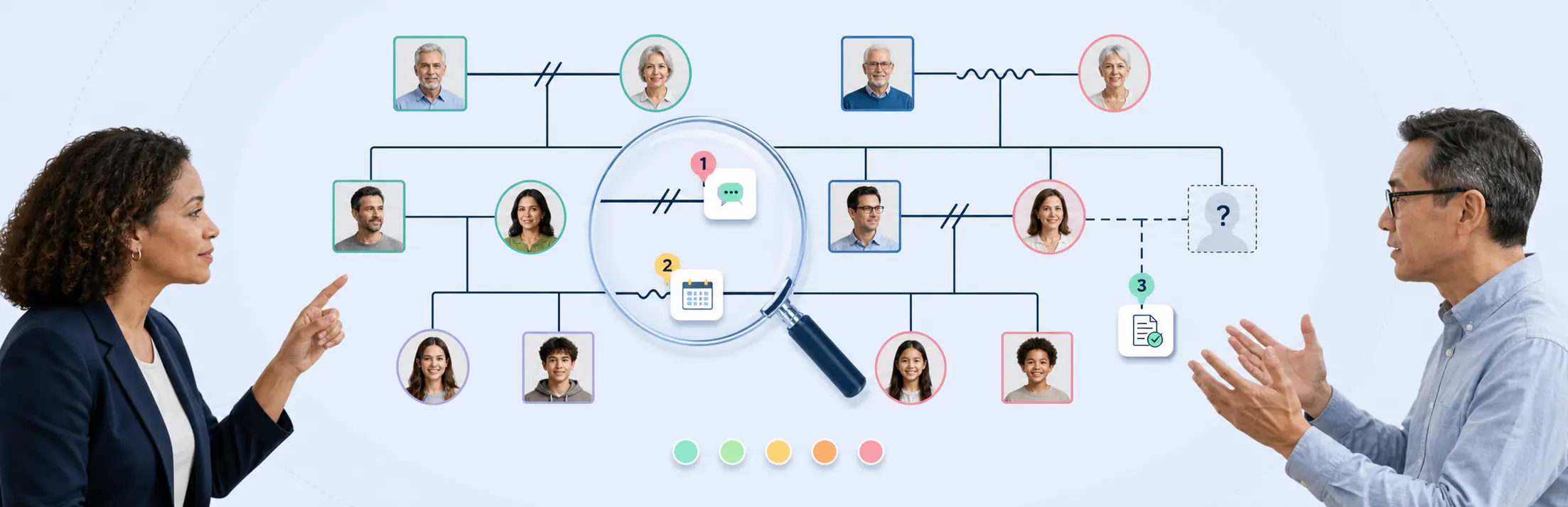
Use Creately’s quick-add controls to add partners, children, parents, or siblings, and apply clinical genogram notation to show family structure clearly. Creately supports 71 relationship subtypes, making it easier to represent marriage, separation, divorce, biological links, adoptive or foster relationships, emotional closeness, conflict, cutoff, hostility, abuse, and other counseling-relevant dynamics.
Step 4 - Add counseling-specific details
Use notes, comments, labels, and structured fields to capture important context such as trauma history, attachment patterns, family roles, coping strategies, risk factors, substance use, cultural background, and key life events. This helps keep the genogram useful for both assessment and ongoing counseling work.
Step 5 - Interpret patterns with the client
Review the genogram with the client to identify patterns, emotional legacies, conflicts, strengths, support systems, and recurring dynamics that may shape their current experiences. Use the visual map to encourage reflection, clarify relationships, and support more focused counseling conversations.
When those observations need to become formal documentation, follow the dedicated guide on how to write a genogram assessment report. It covers report structure, evidence sources, limitations, bounded observations, and follow-up questions without turning the counseling guide into a competing report-writing resource.
How Creately Can Help to Facilitate Engaging Client Counseling Sessions
Creately makes counseling genograms easier to create, discuss, and update throughout the counseling process. Counselors can generate a first draft from intake notes with AI, use templates to save setup time, and refine the genogram with clinical notation, relationship subtypes, structured fields, and visual markers.
During sessions, clients can actively participate in mapping family relationships, emotional patterns, and significant life events. This collaborative approach can make the process more engaging and help clients better understand how family dynamics influence their thoughts, behaviors, and relationships.
Creately also supports real-time collaboration, comments, auto-save, role-based sharing, and exports in PDF, DOCX, PNG, JPEG, SVG, and JSON. This makes it easier to use counseling genograms for session planning, supervision, case documentation, and ongoing client work.
Case Studies and Examples
To showcase the real-world impact of using genograms as a diagnostic tool, let’s explore a couple of case studies:
Case Study 1: Learning About Intergenerational Trauma
By analyzing a genogram, therapists can discover patterns of trauma passed down through multiple generations. This sheds light on the client’s struggles with anxiety and helps develop a tailored treatment plan.
Case Study 2: Identifying Family Communication Patterns
A well-structured genogram can assist a counselor to identify communication issues within a client’s family. This understanding helps address relationship dynamics and guides the client toward improved communication skills.
Benefits and Limitations of Genograms in Diagnosis
Genograms offer many benefits as a diagnostic tool, such as providing a holistic understanding of a client’s context, identifying systemic patterns, and aiding in treatment planning. However, they are not without limitations. Genograms are subjective representations and may not capture the entire complexity of family dynamics. As a mental health practitioner, you should be mindful of potential biases and utilize genograms together with other assessment methods for a comprehensive diagnosis.
Integrating Genograms into Client Counseling
To make the most of genograms as a diagnostic tool, it’s essential to seamlessly integrate them into the therapeutic process. Here are a few key considerations.
Establish a Therapeutic Alliance
Create a safe and trusting environment that encourages clients to openly share their family history and participate in the genogram creation process. Emphasize the collaborative nature of genogram analysis.
Cultivate a Strengths-Based Approach
While genograms provide insights into challenges and conflicts, it’s equally important to focus on identifying and harnessing the strengths and resilience within the family system. Use genograms to celebrate and amplify these positive aspects.