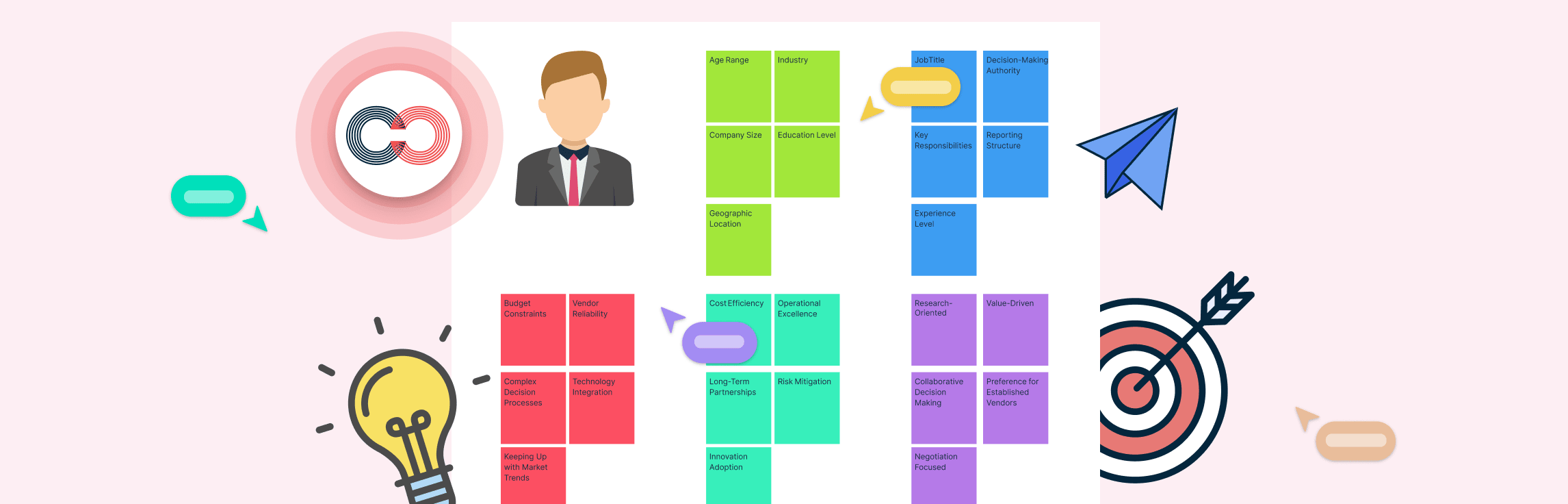
Reaching every customer individually isn’t possible, but creating buyer personas gives you a practical framework to understand your audience at scale. By grouping shared traits and behaviors, you can focus your marketing more effectively. This guide will walk you through the steps to build clear, actionable buyer personas that strengthen your messaging and strategy.
How to Make a Buyer Persona - 5 Simple Steps
Creating a buyer persona matrix doesn’t have to involve messy spreadsheets or scattered notes. With the right structure, you can turn research into a clear, actionable profile that aligns marketing, sales, and product teams around the same customer.
Tip: Use Creately’s buyer persona builder to help you organize insights faster and collaborate, and skip the overwhelm of starting from scratch.
Step 1: Start with a Buyer Persona Template
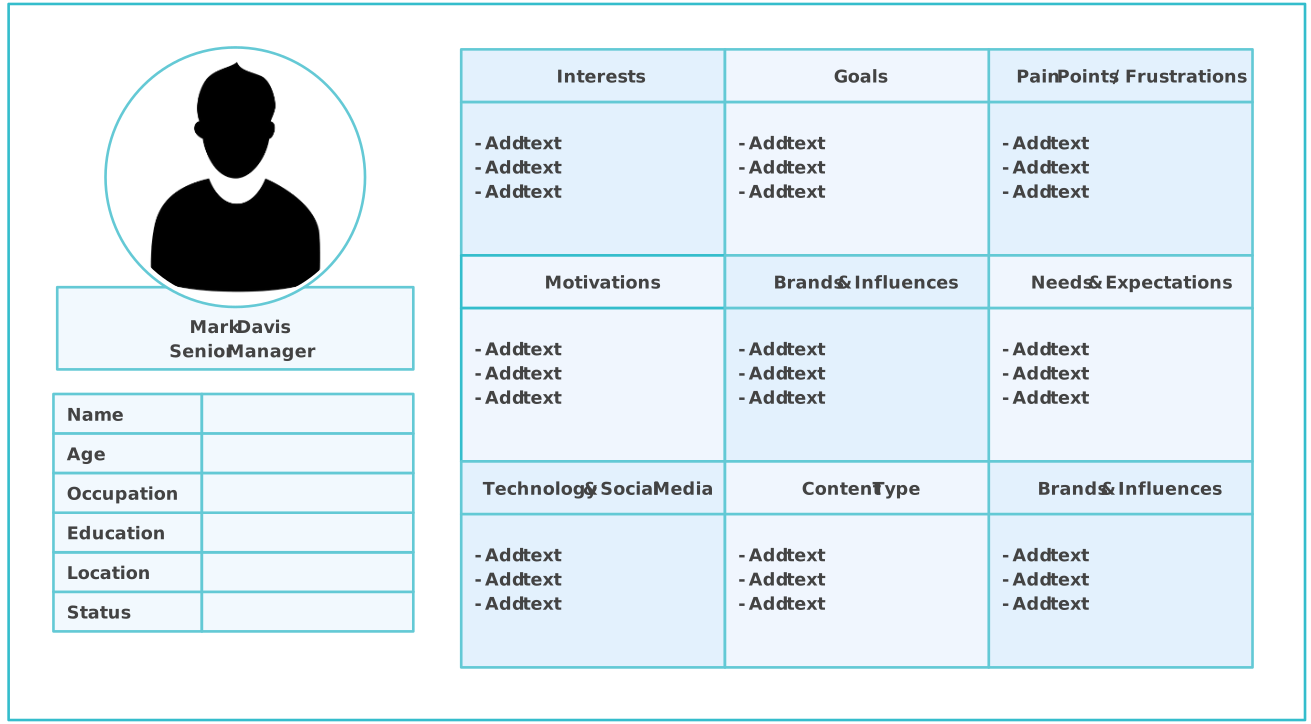
Starting with a template helps you save time and ensures that all essential details like demographics, goals, challenges, and motivations won’t be left out when conducting research in the next step.
Tip: Creately has pre-built buyer persona templates to structure these details quickly and visually.

Step 2: Conduct User Research
Research provides you with factual data while making guesses or assumptions about your target customers will mislead you.
Essential Buyer Persona Data to be Collected
- Demographics
- Education
- Career and working life
- Daily life
- Consumer habits
- Paint points, goals, challenges
- Finances
- Personality and personal life
- Online behavior
- Product related
You can add each of these details directly into your Creately Buyer Persona Template as labeled sections or editable cards. This helps centralize your research and keeps all persona insights in one visual workspace.
Target Audience Research for Making Buyer Personas
Existing Customers: Interview current customers and review sales, marketing, and support insights to understand goals, pain points, and buying behavior.
Competitors’ Customers: Analyze reviews, forums, and social discussions to identify unmet needs and positioning gaps.
Social & Website Data: Use analytics to track demographics, discovery keywords, content performance, and user journeys for building a buyer persona.
User Research Methods for Building a Buyer Persona
Interviews: Conduct one-on-one interviews to gather insights into user behaviors and preferences.
Surveys: Use questionnaires to collect data on demographics, preferences, and patterns.
Observational Studies: Observe users in their natural environment to understand their needs.
Data Analysis: Analyze quantitative data, like website analytics, for user behavior patterns.
User Testing: Observe users performing tasks related to your product or service.
Customer Support Analysis: Review support tickets and feedback to identify common issues.
Online Research: Explore online communities and forums to gain user insights.
Persona Workshops: Organize collaborative workshops to define user characteristics.
Secondary Research: Review existing market research and industry reports.
Empathy Mapping: Create visual representations of user thoughts, feelings, and needs with an empathy map.
All findings from these methods can be added to your Creately canvas using sticky notes, text fields, URL links, or images. This makes it easy to link research evidence directly to persona attributes and collaborate with your team on refining the profiles.
Step 3: Map the Results in the Template
Once your research data is collected, you need to spot patterns and highlight recurring themes. For example, if multiple participants mention similar workplace frustrations or goals, capture these in your buyer persona template rather than treating them as isolated findings. Grouping common insights helps you filter out noise and focus on what truly defines your audience.
In Creately, you can organize these findings by mapping them into the key sections of the Buyer Persona template.
Demographics - Add attributes like age, gender, location, and education in the demographics block.
Background & Goals - Summarize personal/professional history and key aspirations in editable cards.
Pain Points & Challenges - Cluster recurring issues using sticky notes or grouped shapes for visibility.
Motivations & Values - Highlight core drivers or beliefs as notes connected to goals.
Buying Behavior - Document decision triggers and influences in the “Behavior” section.
Communication Style - Note preferred channels or tone directly on the persona profile.
Influences & Sources - Link to trusted platforms, people, or media as URL attachments.
Customer Journey - Map out the stages (awareness → decision → loyalty) visually with Creately’s customer journey map template.
Quotes & Anecdotes - Add direct user quotes in text fields to humanize the persona.
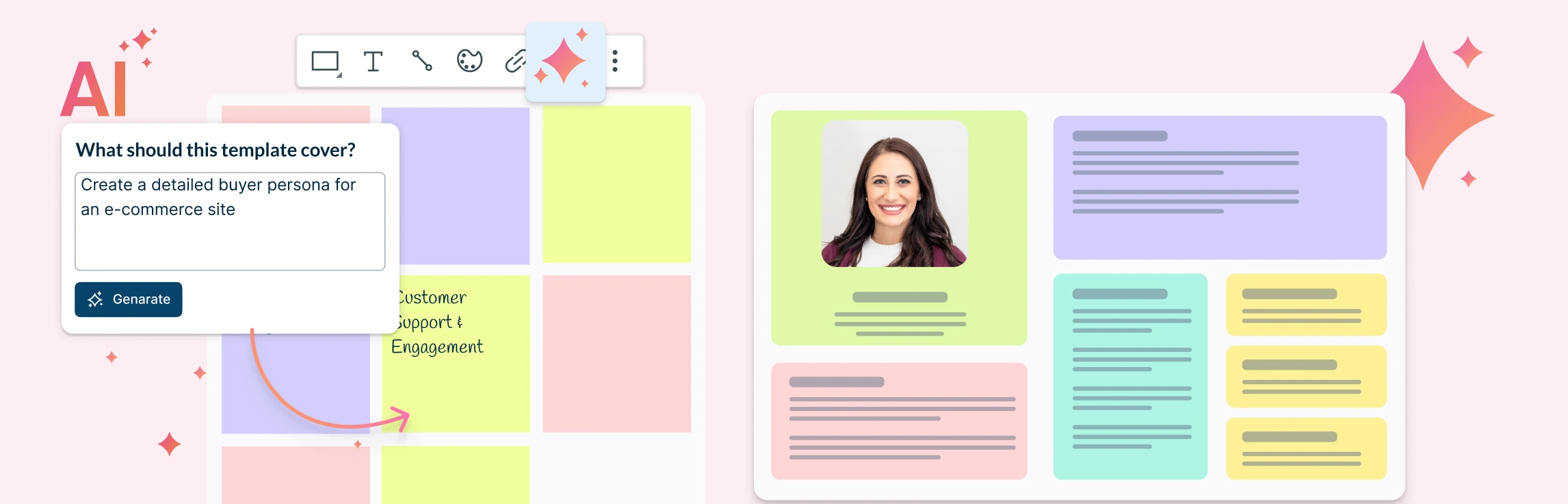
Creately Tip: You don’t need to map everything manually. Creately’s AI User Persona template can take your research inputs and automatically organize them into structured sections like demographics, goals, challenges, and behaviors.
Step 4: Segment Customers
Not all customers belong in the same group. Your audience might include a 15-year-old student and a 60-year-old professional, two very different profiles with unique needs, goals, and buying behaviors. A single sales or marketing approach won’t resonate equally with both. As you analyze your research, you’ll notice natural divisions within your audience based on demographics, preferences, motivations, or habits. These clusters form the basis of customer segments, and each segment deserves its own buyer persona.
Creately Tip: You can create and save a separate Buyer Persona template for each segment. This allows you to maintain multiple personas side by side, compare them visually, and refine strategies tailored to each group.
Step 5: Finalize Your Buyer Persona
Polish each buyer persona matrix into a complete, usable profile. To make them more relatable, assign each persona a name and add a profile picture or avatar. This helps teams reference personas more naturally in planning sessions (e.g., “Would Mary the Student respond well to this campaign?”). Invite your teammates to the workspace to review and refine the personas. Collaborative input from sales, marketing, product, and support teams ensures the buyer personas are accurate, research-driven, and trusted across the organization.
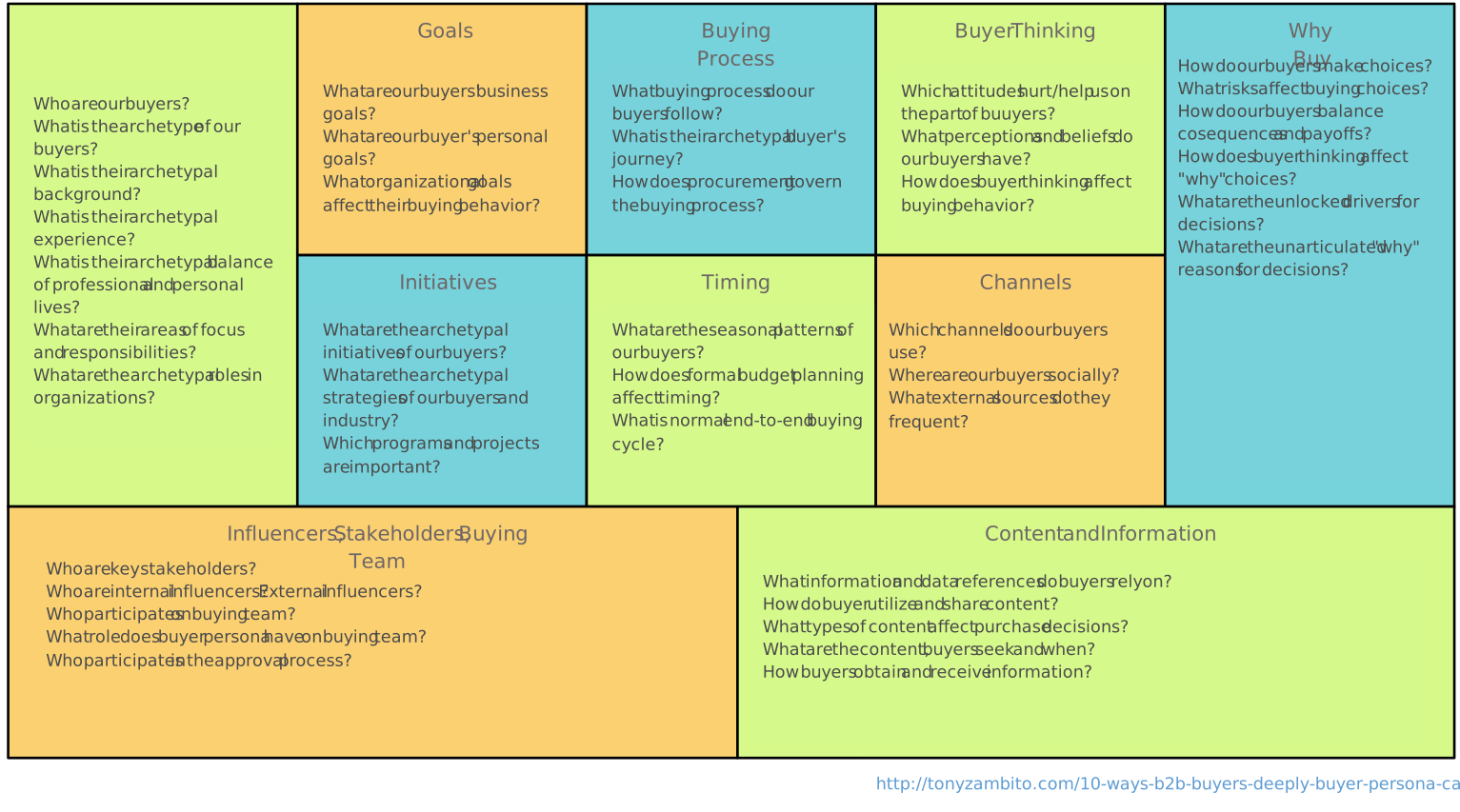
Why You Need to Continuously Update and Refine Your Buyer Persona
Making assumptions: Relying on guesses instead of real data leads to inaccurate personas. Base them on research and customer feedback.
Overgeneralizing: Avoid broad personas; focus on specific segments or subgroups for more effective targeting.
Neglecting research: Conduct thorough surveys, interviews, and data analysis to ensure personas are accurate and reliable.
Lack of validation: Seek input from customers, sales, and stakeholders to refine and confirm your personas.
Lack of detail: Include demographics, behaviors, motivations, goals, challenges, and preferences for comprehensive profiles.
Ignoring negative characteristics: Account for objections, pain points, and challenges to address them in strategies.
Static personas: Continuously update and refine personas as audience insights and market trends evolve.
Disregarding multiple personas: Create distinct personas for different segments to avoid generic messaging.
Lack of alignment with strategy: Ensure personas guide marketing, product, and customer experience strategies effectively.
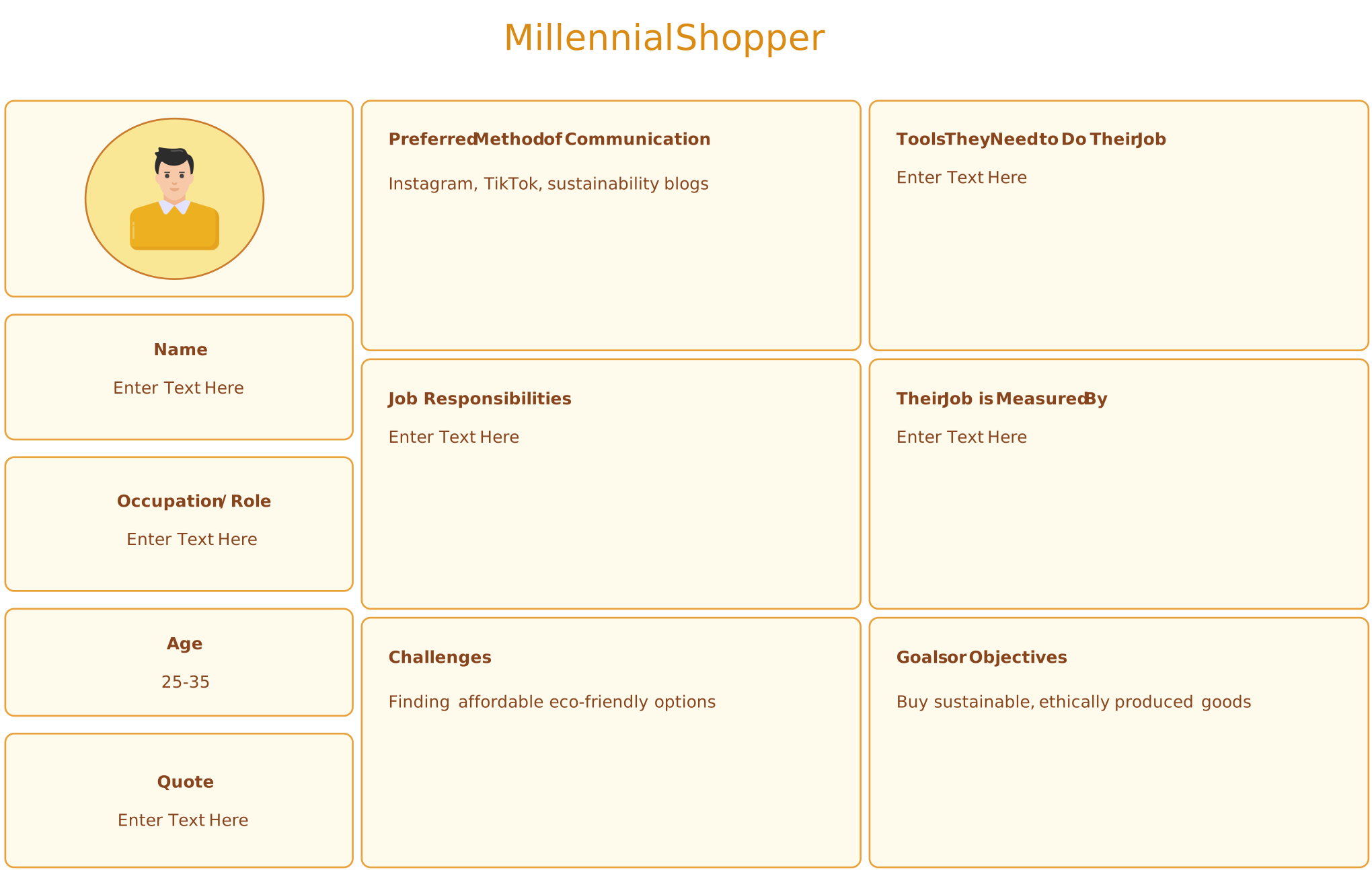
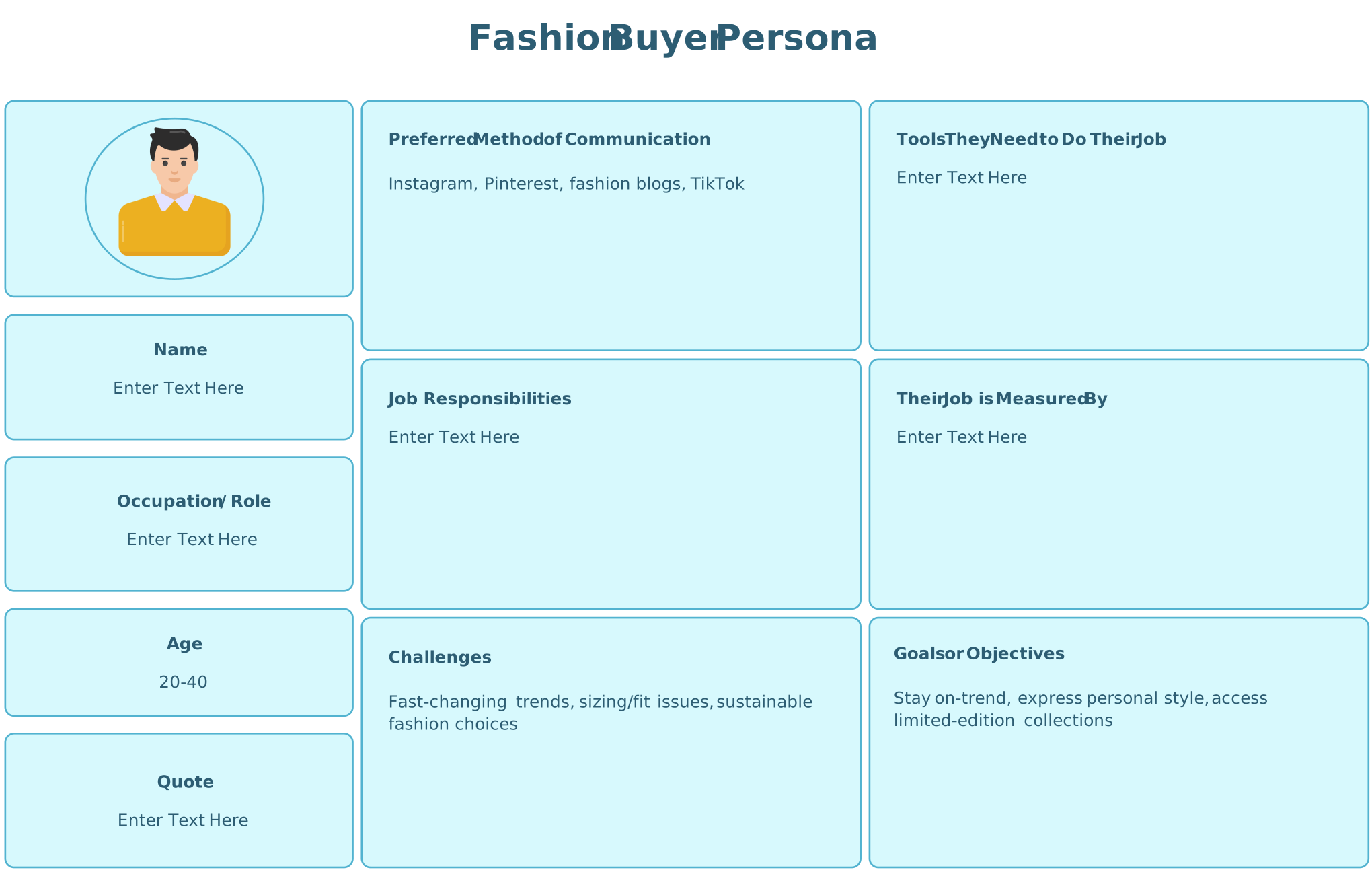
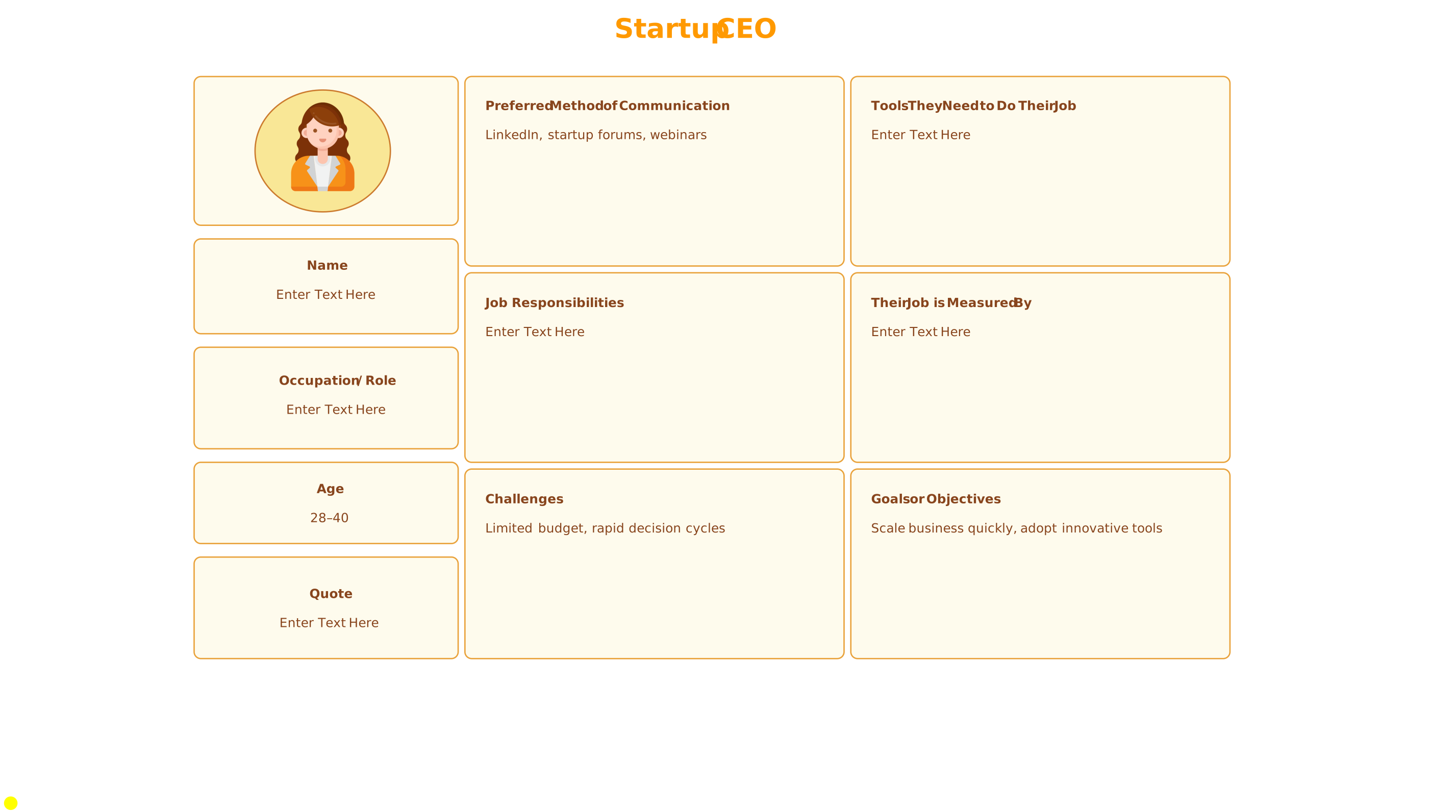
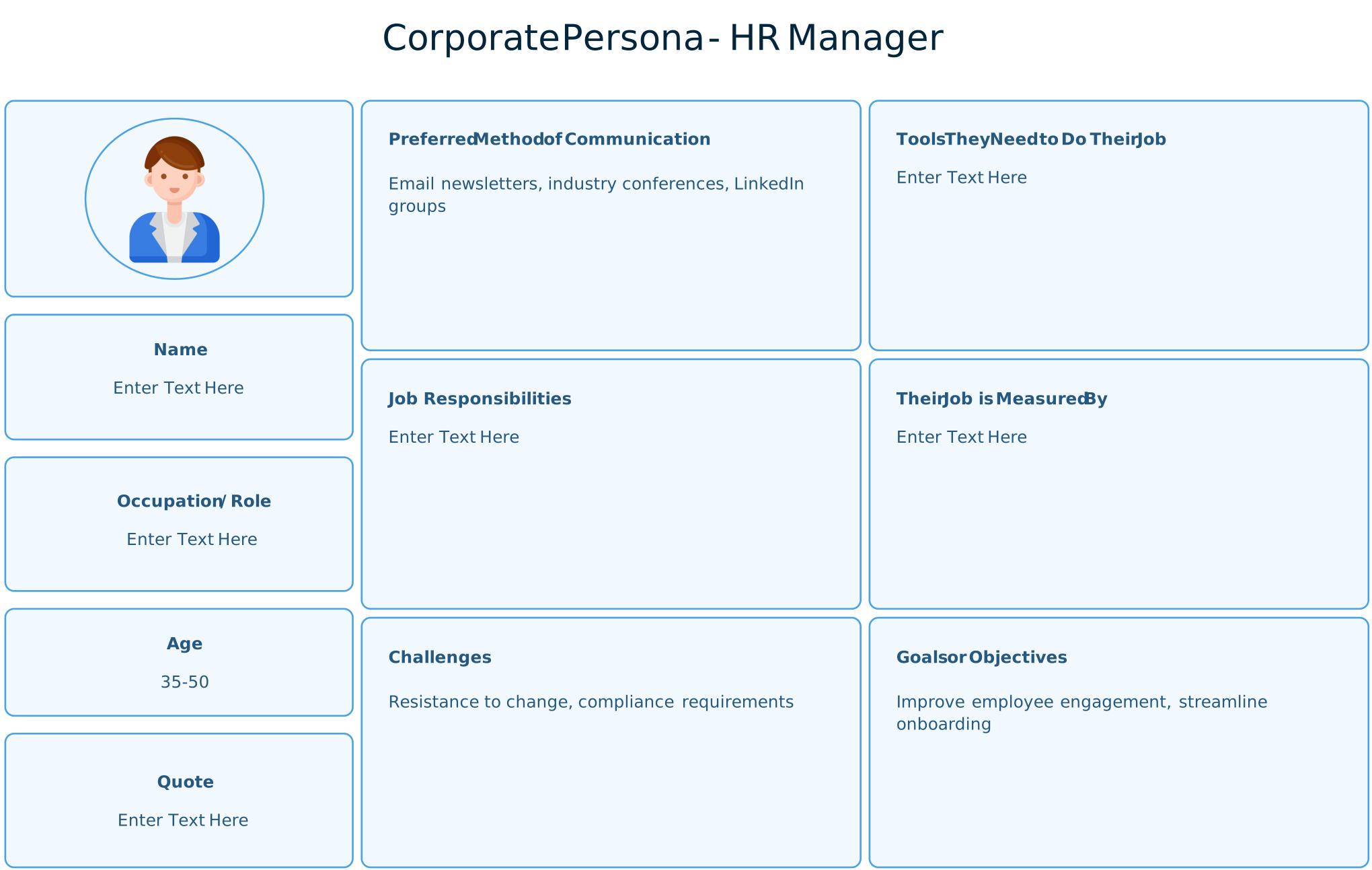
Free Templates for Creating Buyer Personas


Helpful Resources for Making Buyer Personas
Discover our collection of buying persona examples you can customize for any industry.
Discover what makes B2B buyer personas different, and research methods to create them.
Learn how to generate Buyer Personas with AI.
FAQs on How to Build A Buyer Persona
What Type Of Businesses Can Benefit from Creating Buyer Personas?
What is a negative buyer persona?
Who is involved in creating a buyer persona?
How to use buyer personas for content creation?
Resources
Andi Honka, and Carolin Durst. “Ideal Customer Profile, Customer Insights Und Buyer Personas - Kenne Deine Kunden.” Springer EBooks, 1 Jan. 2025, pp. 31-53, https://doi.org/10.1007/978-3-658-45379-4_3.
Fenton, Alex, et al. “How to Use the Six-Step Digital Ethnography Framework to Develop Buyer Personas: The Case of Fan Fit.” JMIR Formative Research, vol. 6, no. 11, 25 Nov. 2022, p. e41489, formative.jmir.org/2022/11/e41489/, https://doi.org/10.2196/41489.