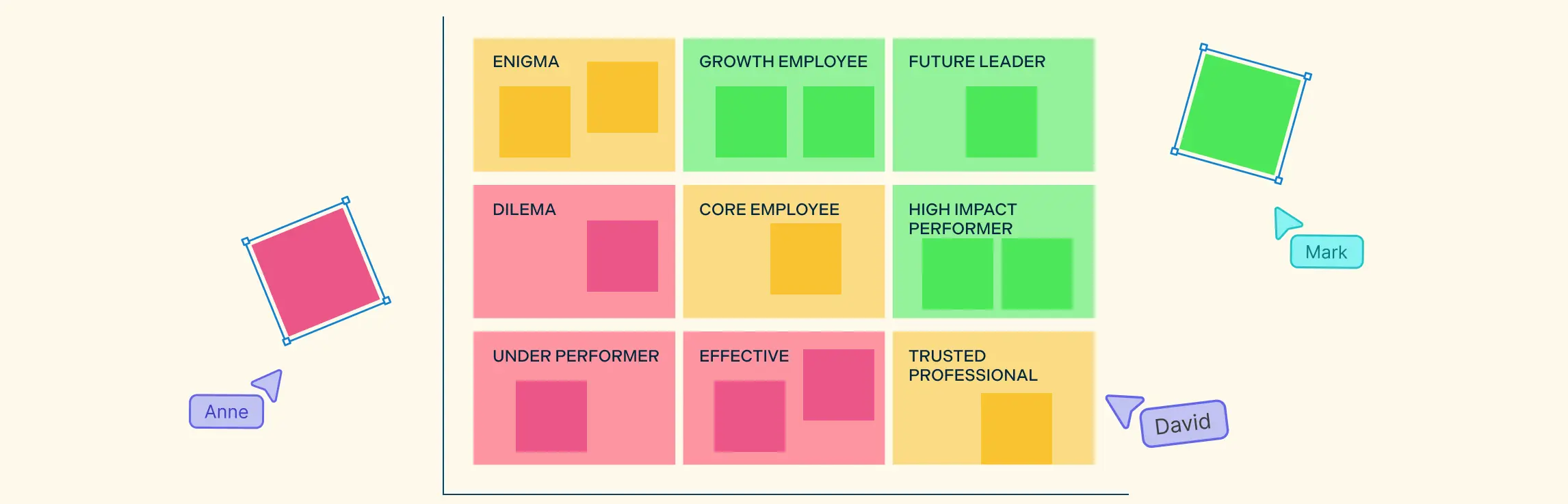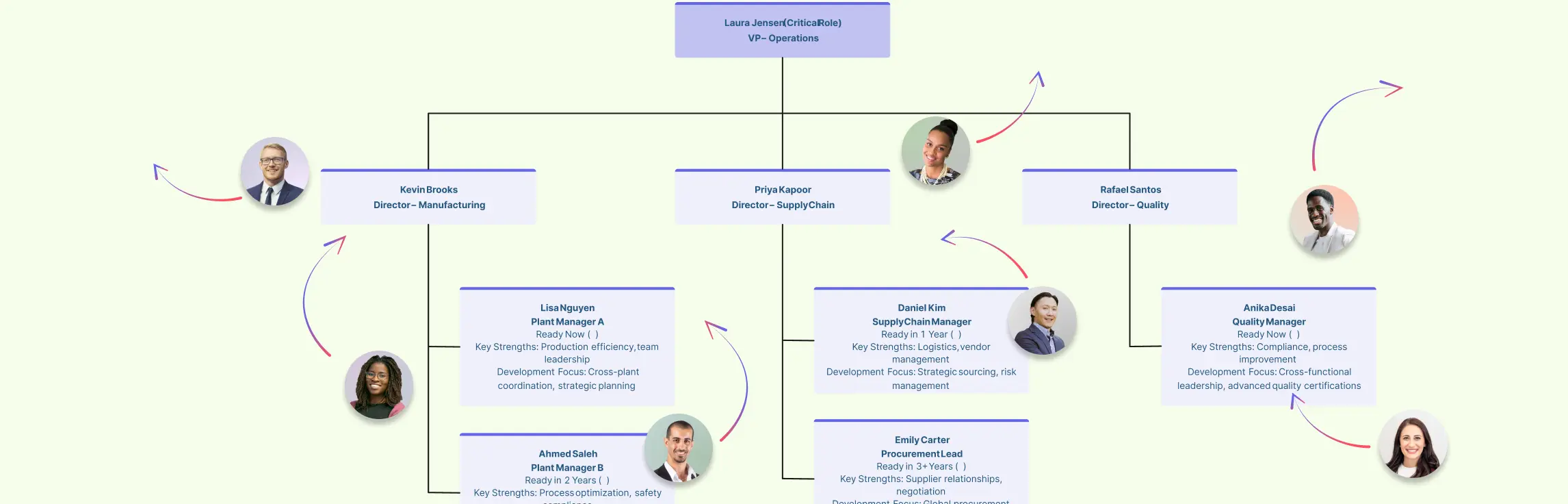
This guide walks you through replacement planning in a clear, practical way, so you’re never left guessing when key roles change. You’ll learn what replacement planning is, when to use it, and where it fits into a broader talent strategy. We’ll break down the pros and cons, show how succession planning helps close the gaps, and bring it all to life with real-world examples across business, operations, and academia.
What is Replacement Planning?
Replacement planning helps you stay prepared when a key person leaves, so you’re not caught off guard. Instead of scrambling, you already know who can step in and keep work moving with minimal disruption. It gives you clarity on who’s ready now, where support is needed, and which roles carry the most risk, so transitions feel calm, confident, and manageable rather than rushed and stressful.
When to Use Replacement Planning
Replacement planning is most effective in moments where speed and continuity matter. Use it in the following situations:
When a key role is critical to daily operations and can’t stay vacant.
When unexpected exits, absences, or leave would disrupt decisions or delivery.
During periods of high turnover, restructuring, or rapid growth.
When you need a clear, ready-now backup for leadership or specialist roles.
When business continuity matters more than long-term talent development.
When you want confidence that someone can step in immediately without slowing teams down.
Replacement planning is often confused with succession planning, but they’re not the same. The replacement plan focuses on immediate coverage for critical roles, while the succession plan looks further ahead, developing people over time to step into future leadership positions. In practice, strong organizations use both. To learn more about their differences, read our replacement planning vs succession planning guide.
Pros and Cons of Replacement Planning
Workforce replacement planning is a practical way to reduce risk, but it’s not a complete talent strategy on its own. Understanding where it helps, and where it falls short, makes it easier to use it effectively.
| Pros | Cons |
| Keeps operations running smoothly when someone leaves unexpectedly | Focuses on short-term coverage rather than long-term development |
| Reduces panic, delays, and last-minute decision-making | Can overlook future leadership needs if used alone |
| Provides clear visibility into coverage gaps for critical roles | May limit growth opportunities if the same “safe” backups are reused |
| Builds confidence among leaders and teams that there’s a plan in place | Doesn’t always address skill gaps or readiness depth |
| Faster and simpler to implement than long-term talent programs | Works best when paired with succession planning, not as a replacement for it |
Succession planning helps offset many of these limitations by focusing on long-term development, expanding the talent pipeline, and preparing future leaders, making it a strong complement to replacement planning rather than a substitute for it. To learn more about how this is done, read our succession planning process guide.
How Succession Planning Can Overcome Limitations in Replacement Planning
Succession planning strengthens the replacement plan by addressing its gaps and extending its impact. It helps by:
Shifting the focus from short-term coverage to long-term readiness.
Developing future leaders instead of relying only on immediate backups.
Expanding the pool of potential successors across roles and levels.
Closing skill and experience gaps through targeted development.
Creating clear growth paths that motivate and retain talent.
Ensuring leadership continuity as the organization evolves.
The replacement plan provides stability in the moment, while the succession plan builds confidence in the future. Creately’s succession planning software supports that future focus by visualizing roles, tracking readiness, and enabling teams to collaborate as leaders are developed over time.
How to Develop a Replacement Plan
Replacement planning doesn’t need to be complex to be effective. The goal is to ensure that critical roles are covered if someone leaves unexpectedly, with minimal disruption to work and decision-making. The steps below help you build a clear, practical replacement plan that focuses on readiness today while staying aligned with broader talent strategies.
Step 1: Identify Critical Roles
Start by identifying roles that would cause immediate disruption if left vacant. Focus on impact, not job titles. A non-executive specialist role can be just as critical as a leadership position. These are positions that,
- Are essential to daily operations or decision-making.
- Hold specialized knowledge or skills.
- Act as single points of failure.
- Lead teams, systems, or key processes.
Step 2: Map Current Role Holders
Document who currently occupies each critical role. This creates the foundation for understanding exposure before identifying replacements. This provides visibility into where risk is concentrated, which teams or functions depend heavily on one individual and roles with no immediate backup.
Step 3: Identify Ready-Now Replacement Candidates
For each critical role, identify internal candidates who could step in on short notice. The focus here is immediate or near-term coverage, not long-term potential. The candidates could be direct reports, peer leaders with overlapping skills, or experienced employees familiar with the role or function.
Step 4: Assess Readiness and Capability
Evaluate how prepared each replacement candidate is to assume the role if needed. Readiness is often categorized (for example: ready now, ready soon, or needs support) to keep assessments simple and actionable. You will need to consider,
- Current skill alignment.
- Experience with key responsibilities.
- Decision-making authority.
- Ability to operate independently.
Step 5: Identify Gaps and Risk Areas
Once roles and replacements are mapped, look for gaps that highlight where short-term actions are needed to reduce risk. Look for roles with no identified replacement, candidates who require support or temporary oversight and if there’s overreliance on the same individual across multiple roles.
Step 6: Define Short-Term Support or Development Actions
For roles with partial coverage, define practical steps that improve readiness. These actions strengthen the replacement plan without turning it into a full succession program. Some actions you could take are,
- Temporary delegation of responsibilities.
- Shadowing or mentoring.
- Documentation of critical processes.
- Interim leadership arrangements.
Step 7: Review and Update Regularly
Keeping the plan current ensures it remains useful during real transitions, not just on paper. Replacement plans should be revisited whenever people move roles or leave, when organizational priorities change and new risks emerge.
Replacement Planning Example Scenarios
These examples show how replacement planning charts are used in real situations to keep organizations steady when key roles change, whether in corporate leadership, critical operations, or academic governance.
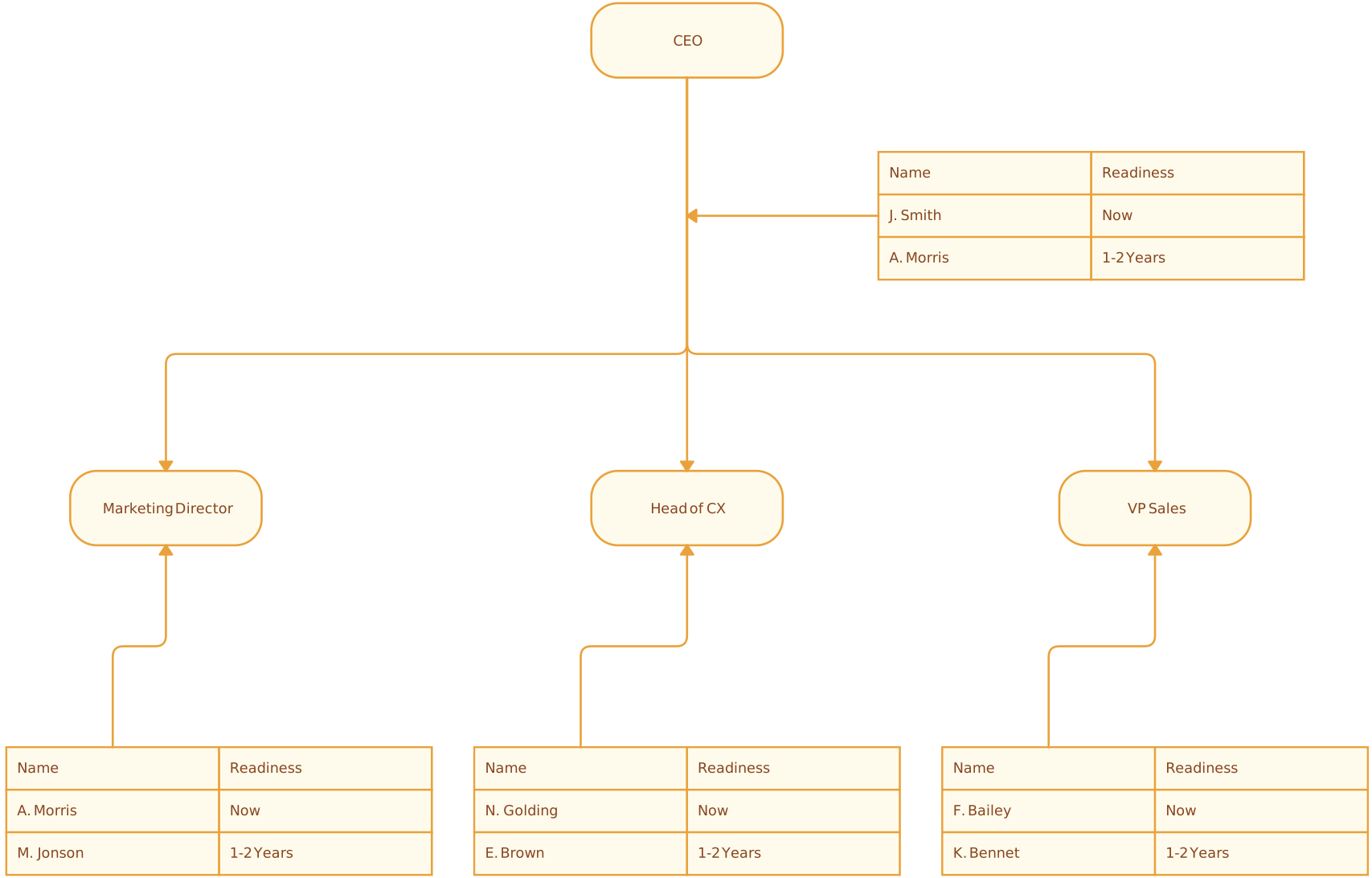
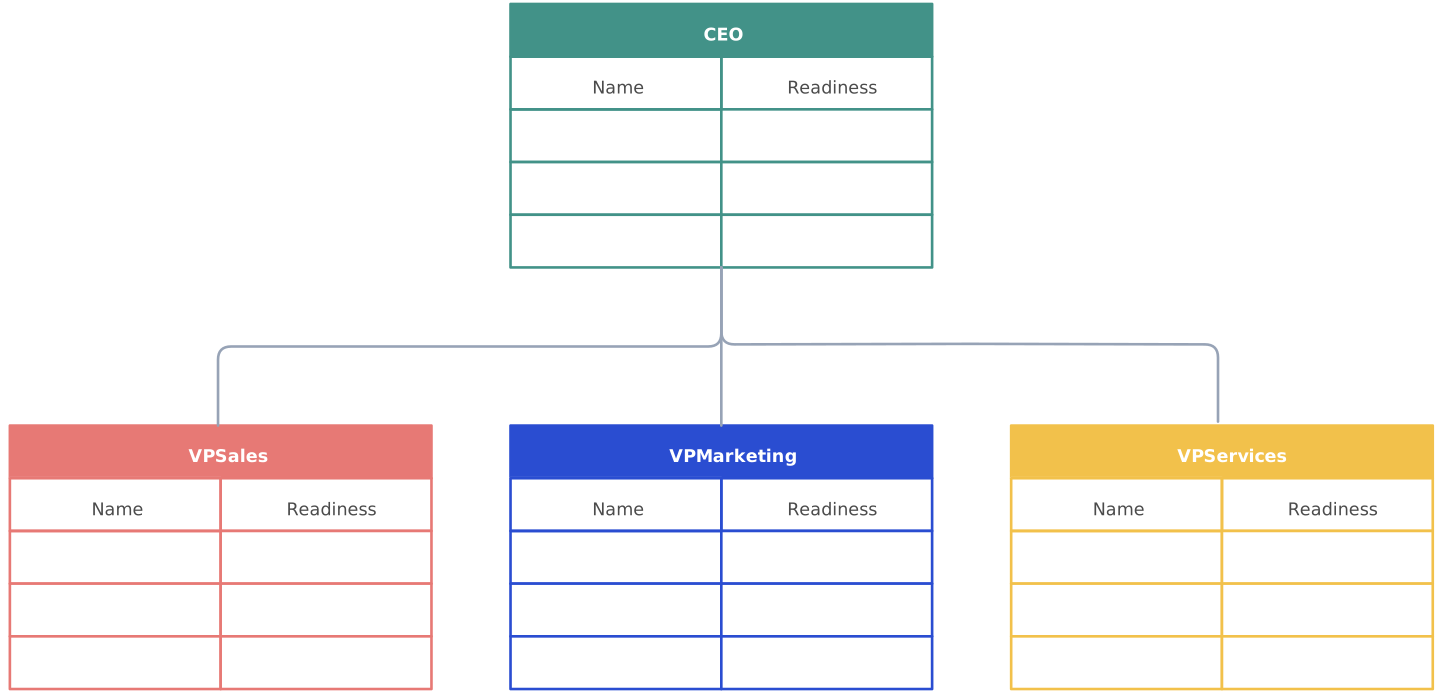
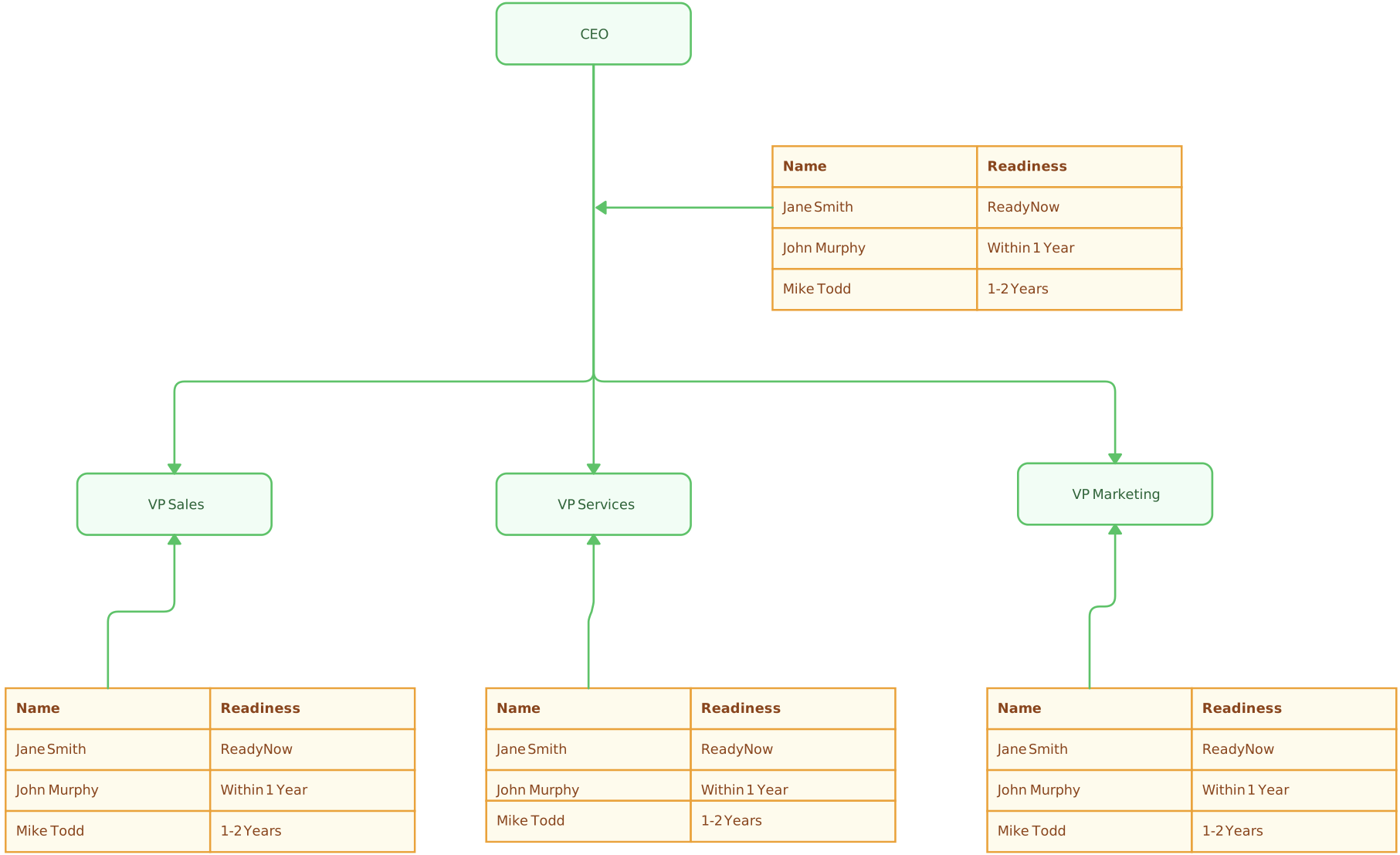
Company Leadership Departure Example
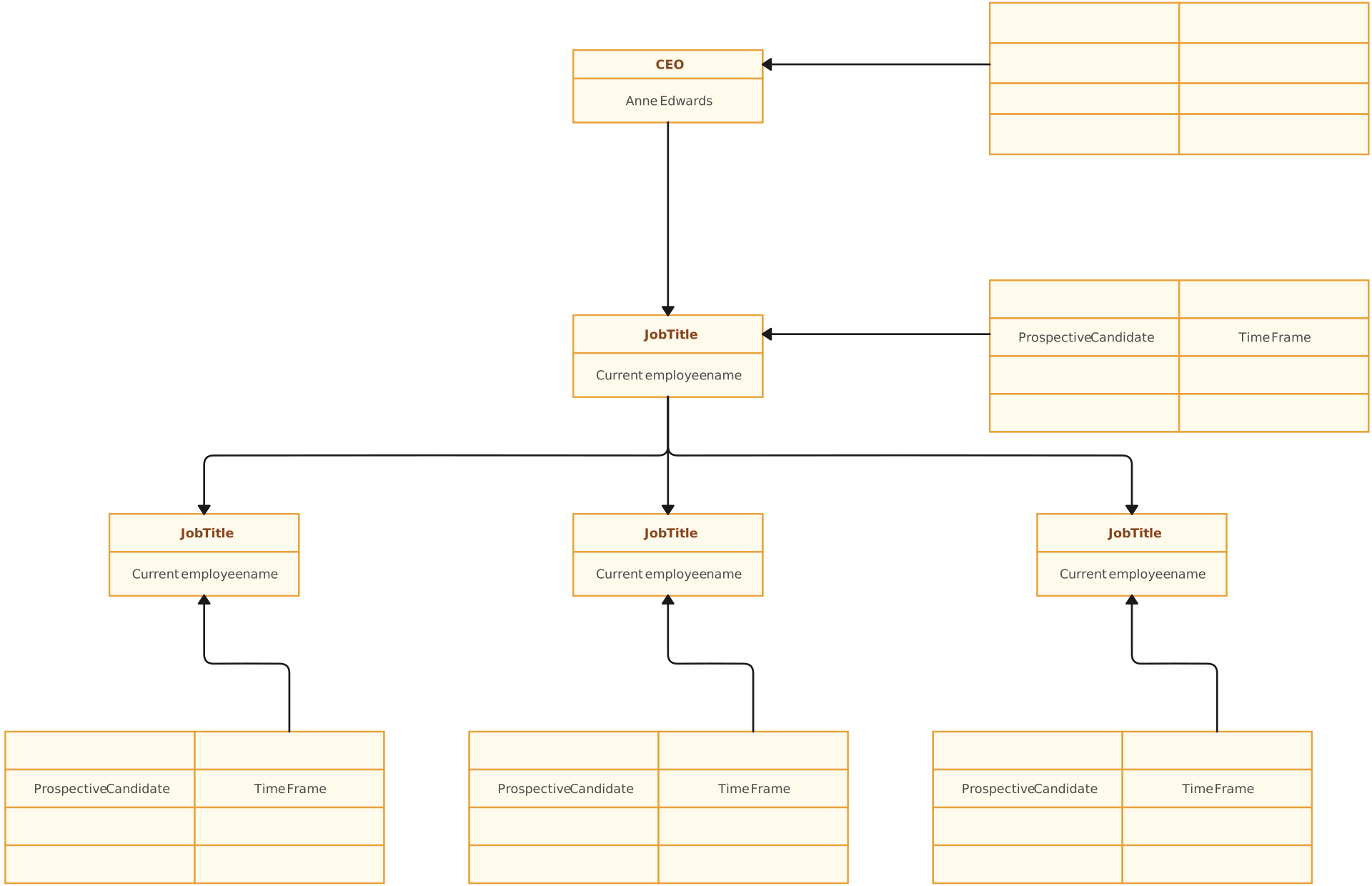
This replacement plan shows the current leader, identified internal replacements, and their readiness levels, alongside coverage for key roles such as the Head of CX, Marketing Director, and VP of Sales. It gives leaders a quick, clear view of who can step in and where support may be needed.
This chart is useful for leadership departure scenarios like:
- Planned retirements.
- Unexpected resignations.
- Extended leave or sudden absences.
- Organizational restructuring or role changes.

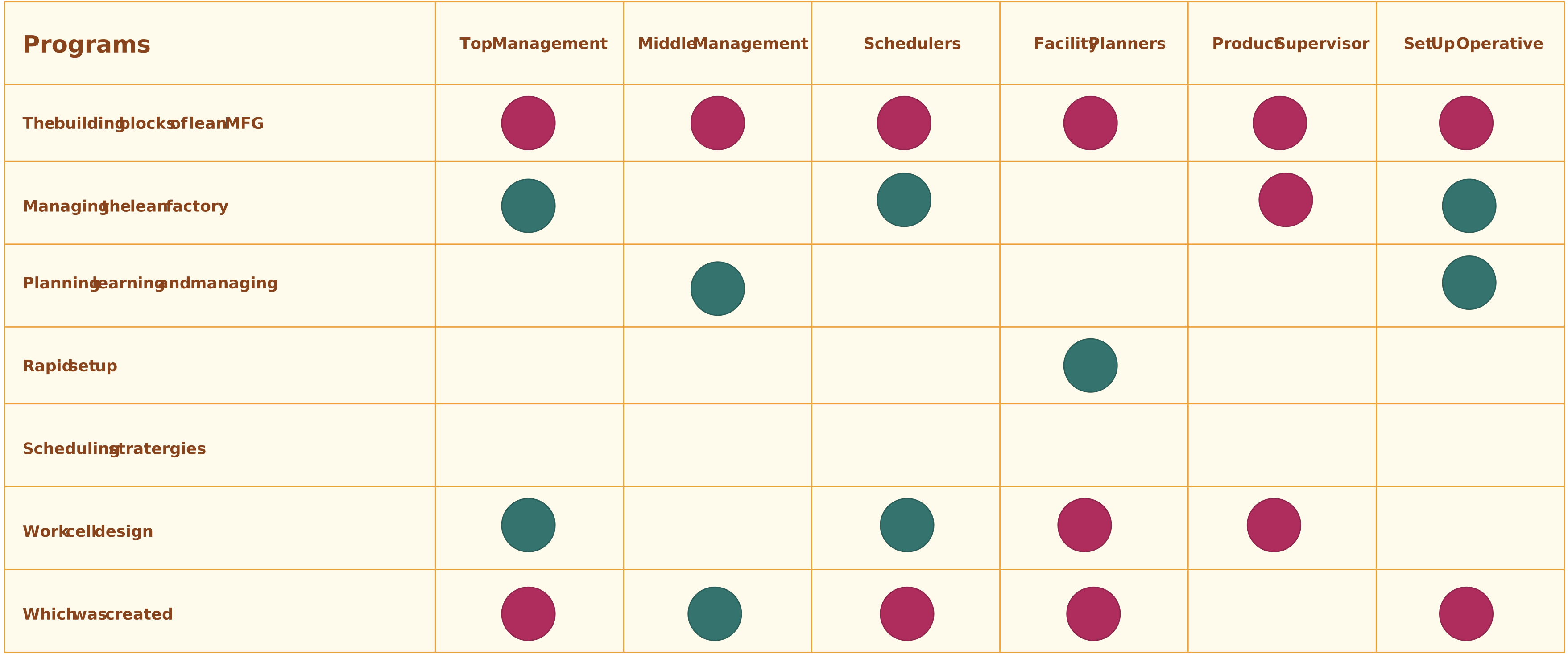
Critical Role Coverage Example
This replacement planning chart shows critical roles, current role holders, and identified internal replacements, along with their skills and readiness levels. It gives leaders a fast, practical view of coverage across the organization and highlights where short-term support or training may be required.
This chart is useful for replacement planning scenarios such as:
- Loss of a specialist or single-point-of-failure role.
- Sudden project owner or program lead unavailability.
- High-turnover roles that require frequent backfilling.
- Temporary coverage during internal transfers or promotions.
- Rapid team scaling where new leadership roles are still stabilizing.
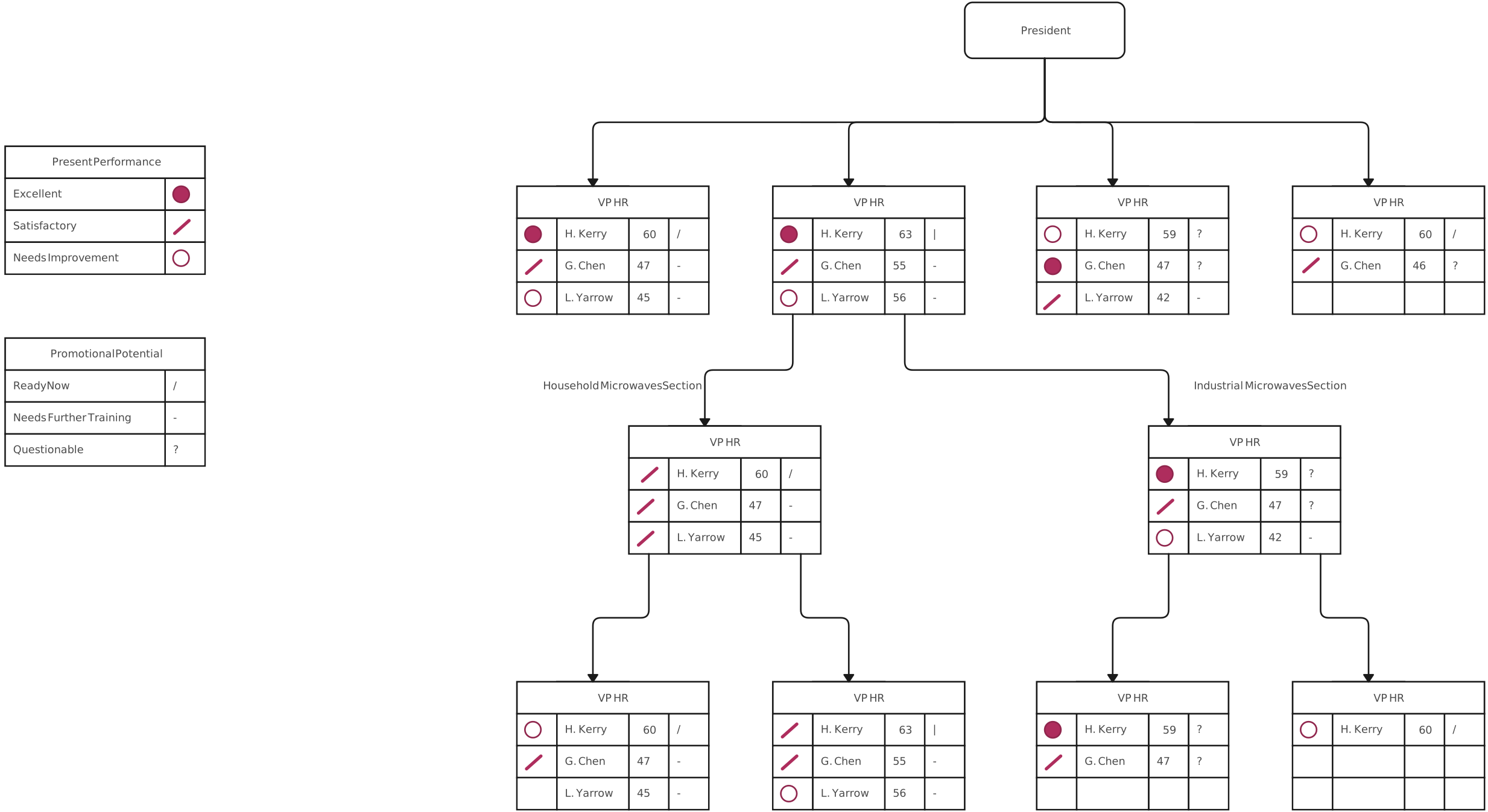
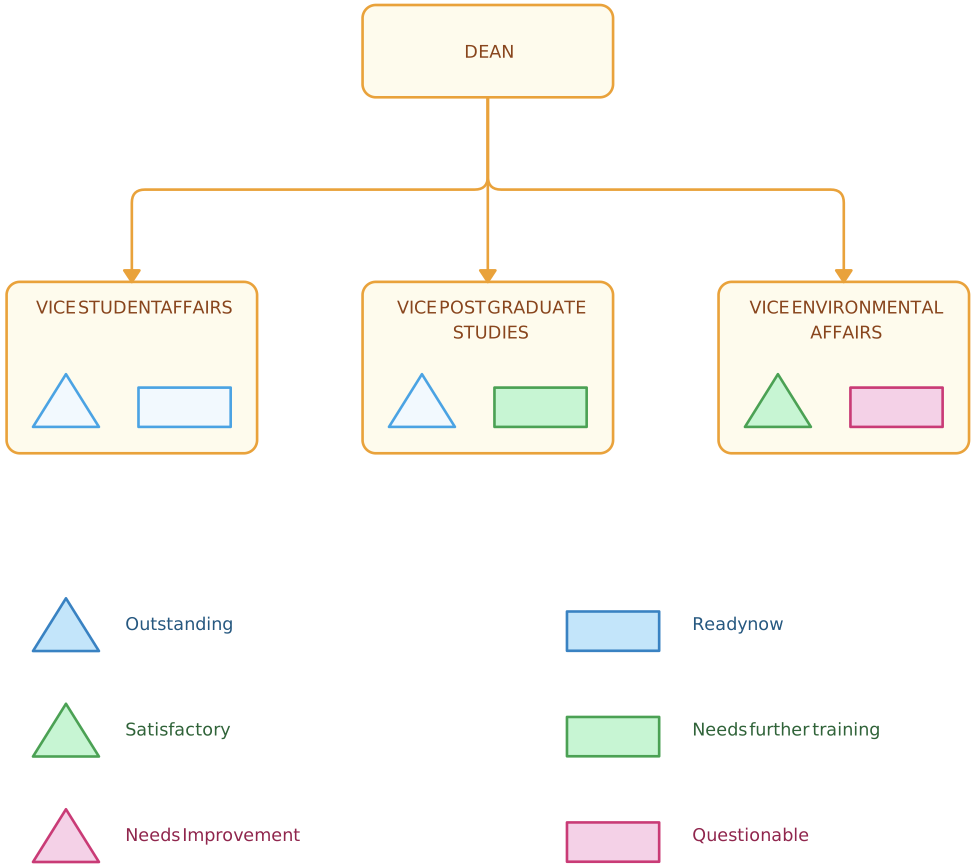
Academic Leadership Transition Example
This replacement planning chart illustrates how an institution prepares for the departure of a Dean by clearly mapping potential successors across Vice Chancellor roles. The chart displays the outgoing Dean, the Vice Chancellors who could assume responsibility, and their readiness levels, making it easy to understand who can step in and how prepared they are.
This chart is useful for replacement planning scenarios such as:
- Scheduled rotation or term completion of academic leaders.
- Sudden vacancy in a faculty or school leadership role.
- Interim appointments during governance or policy transitions.
- Ensuring continuity in academic oversight and decision-making.
- Reducing disruption to staff, students, and academic operations.
Free Replacement Planning Templates to Get Started


FAQs on Replacement Plan
Which roles should be included in the replacement plan?
Is replacement planning only for leadership roles?
Can replacement planning reduce the need for external hiring?
Do you still need succession planning if you have replacement planning?
Resources
Phillips, Laura K. “Concept Analysis: Succession Planning.” Nursing Forum, vol. 55, no. 4, 27 July 2020, https://doi.org/10.1111/nuf.12490.
Rothwell, William J. “Replacement Planning: A Starting Point for Succession Planning and Talent Management.” International Journal of Training and Development, vol. 15, no. 1, 17 Feb. 2011, pp. 87–99, https://doi.org/10.1111/j.1468-2419.2010.00370.x.