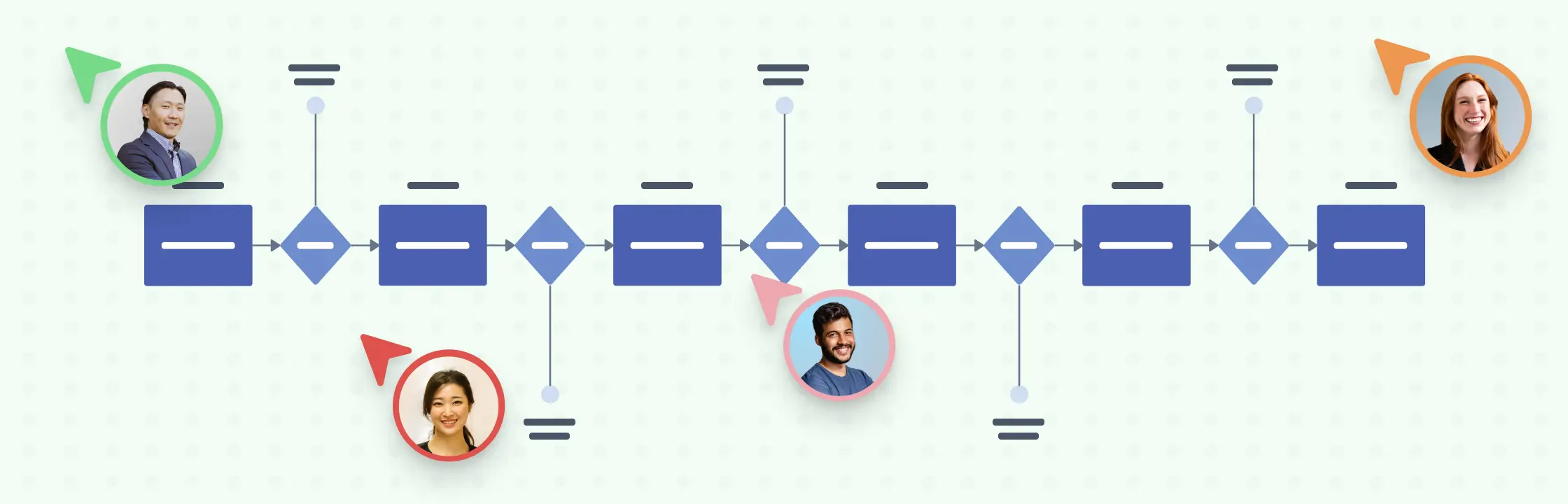
The stage gate process, also called a phase gate process, divides an innovation initiative into stages of work separated by decision gates. At each gate, decision-makers assess the evidence, business rationale, risks, and proposed plan before committing resources to the next stage. This guide explains the model’s stages, gates, roles, advantages, limitations, and practical use in project management.
What is the Stage Gate Process in Project Management?


The stage gate process is a structured innovation-management framework used especially for new product development, services, and other innovation initiatives. Work happens within stages, while gates provide defined points for evaluation and investment decisions.
Each stage has a purpose and a set of cross-functional activities designed to reduce uncertainty and produce the evidence required for the next decision. At a gate, designated decision-makers review the previous stage’s deliverables against established criteria and choose an outcome such as go, stop, hold, or revise. The exact terminology and number of stages can be adapted to the initiative’s scale, uncertainty, and risk.
This structure can help organizations compare opportunities, identify risks earlier, and direct resources toward initiatives that continue to meet strategic and commercial criteria. It does not guarantee project success; its value depends on appropriate criteria, reliable evidence, timely decisions, and a process that is proportionate to the work.
Although most closely associated with product and service innovation, phase gate principles can be adapted to other high-investment initiatives. Iteration may occur within or between stages, so the model should not be treated as a strictly linear substitute for experimentation or agile delivery.
Key components of the stage gate process
There are several key components to the stage gate process that guide project development and decision-making.
Stages: Projects are divided into distinct phases, each representing a key step in the project’s development process. Common stages include concept development, feasibility analysis, design, development, testing, and launch.
Gates: Decision points separate the stages. Gatekeepers evaluate the previous stage’s deliverables, business rationale, risks, and next-stage plan before deciding whether to continue, stop, hold, recycle, or conditionally proceed.
Criteria: Defined criteria give gatekeepers a consistent basis for assessing strategic fit, customer value, feasibility, financial potential, risk, and readiness. The criteria should match the initiative and remain distinct from the deliverables submitted for review.
Cross-functional teams: Cross-functional teams composed of members from various departments and disciplines collaborate to make sure that all aspects of the project are thoroughly assessed.
Documentation: Teams present a concise, decision-ready record of what was learned, supporting evidence, unresolved risks, assumptions, and the plan and resources requested for the next stage. The level of documentation should be proportionate to the decision and risk.
When to Use the Stage Gate Process?
The stage gate process is especially helpful for structured project management, effective decision-making, and risk mitigation.
New product development: It’s widely used in product development projects to make sure that new products are thoroughly vetted, meet market needs, and align with business goals.
Innovation projects: Initiatives involving substantial uncertainty, investment, or cross-functional coordination may benefit from structured learning stages and explicit investment decisions.
Complex projects: For projects with multiple phases, multiple stakeholders, and significant risks, the stage gate process offers a systematic way to manage and control the project’s progress.
Resource allocation: When you need to allocate resources efficiently and make informed decisions about project funding and priorities.
Quality control: To maintain and improve product or process quality by incorporating checkpoints for quality assessment and improvement.
Strategic alignment: Stage gate process helps projects stay on track when they need to align with the organization’s goals and objectives.
Cross-functional projects: Defined owners, deliverables, criteria, and handoffs can clarify how different functions contribute to the evidence and decisions required at each gate.
Regulated environments: A phase gate structure can incorporate compliance evidence and specialist review at defined checkpoints. It supports governance but does not replace applicable legal, regulatory, safety, or quality-management requirements.
What are the Phases of Stage Gate Process?

Stage 0: Idea Generation & Discovery
Idea generation: This initial stage involves the generation of project ideas and concepts. Ideas can come from various sources, such as employees, customers, market research, and brainstorming sessions.

Opportunity assessment: During this phase, the project ideas are evaluated and assessed to determine their potential value, alignment with strategic goals, and overall feasibility.
Initial screening: Ideas are assessed against high-level strategic, market, and feasibility considerations. Promising ideas can proceed to scoping, while others may be held, revised, or stopped before significant resources are committed.
Stage 1: Scoping
Concept refinement: In the scope stage, the selected project ideas are refined into more detailed project concepts. The project’s objectives and goals are clarified, and a more precise scope is established.
Market analysis: Further market research and analysis can be carried out to better understand the potential customer base, market demand, and competitive landscape.
Feasibility assessment: A preliminary assessment of the project’s feasibility is carried out, focusing on technical, financial, and operational aspects.

Stage 2: Business Case Development
Detailed planning: This stage involves detailed planning for the project which includes outlining the project objectives, budget, timeline, and resource requirements in more depth.
Financial projections: A comprehensive business case is developed, including financial projections, revenue forecasts, and return on investment (ROI) estimates.

Strategic alignment: The business case underscores how the project aligns with the organization’s strategic objectives and whether it represents a sound business opportunity.
Stage 3: Development
Execution: The development stage marks the actual execution of the project plan. This is where the project team starts working on the project’s design, development, and implementation.

Quality control: Throughout the development phase, quality control measures are implemented to make sure that the project meets defined quality standards.
Progress monitoring: The team monitors progress, evidence, assumptions, risks, and readiness for the next gate, addressing issues or revising the plan as new information emerges.
Stage 4: Testing & Validation
Testing: Thorough testing of the project is conducted to validate that it meets the specified criteria, standards, and customer requirements.
Validation: The project’s results are validated to confirm that it fulfills its intended purpose and achieves its goals.
Feedback integration: Feedback from testing and validation is used to make needed adjustments and improvements to the project.

Stage 5: Launch
Market introduction: The project is launched into the market, and activities related to marketing, sales, and distribution are executed.
Customer engagement: Organizations engage with customers and collect feedback to understand their experiences with the project or product.
Post-launch review: After the launch, a post-launch review can be carried out to assess the project’s performance, evaluate customer feedback, and identify opportunities for continuous improvement or further development.
What are the Gates of the Stage Gate Process?
Gates are decision points that precede the next stage. A cross-functional group of authorized business leaders—often called gatekeepers—reviews what the team learned and decides whether the organization should continue investing. Subject-matter experts may advise the review, but the decision rights should be explicit. Gatekeepers assess the submitted deliverables against defined criteria and evaluate the proposed plan and resources for the next stage.
Gates include
Initial screening - Initial ideas are evaluated for alignment with strategic goals. The project can proceed, be put on hold, or terminated.
Preliminary approval - A more detailed plan is assessed for feasibility and alignment with strategic objectives, determining whether the project proceeds.
Decision on business case (project approval) - A comprehensive business case is evaluated for financial viability and alignment with the organization’s objectives. Full approval secures resources and funding.
Post-development review - The final project, including testing, is examined for quality and readiness for market introduction.
Pre-commercialization business analysis - The project’s market readiness and commercial viability are assessed, determining whether it’s ready for official market launch.
The main element of every gate include
Deliverables - The evidence and high-level synthesis the project team submits from the completed stage.
Criteria - The standards gatekeepers use to evaluate the initiative consistently and determine whether further investment is justified.
Outputs - The gate decision and, when work proceeds, an approved next-stage plan with resources, responsibilities, conditions, and expected deliverables.
Who is Involved in the Stage Gate Process
The stage gate process involves a range of individuals and roles at various stages to make sure that a project is thoroughly evaluated and aligned with organizational goals.
- Project team: Responsible for executing the project. Include project managers, engineers, designers, and other specialists.
- Gatekeepers: Hold the authority to make investment and prioritization decisions at each gate. They are typically a cross-functional group of business leaders; specialists can provide evidence or advice.
- Cross-functional teams: Help with different parts of the project, like studying the market.
- Project sponsors: Provide the necessary resources and funding for the project.
- Customers: Their opinions are important to make sure the project meets their needs.
- Sales and marketing teams: Play a crucial role in marketing and launching the project once it’s ready for the market.
Advantages and Disadvantages of the Stage Gate Process
| Advantages | Disadvantages |
|---|---|
| Provides a systematic approach to evaluate projects at various stages, making informed decisions. | Excessive gatekeeping can lead to too much time spent on analysis and decision-making, slowing down projects. |
| Helps identify and address project risks early in the process, reducing the chances of costly failures. | Gatekeepers may create unnecessary hurdles, causing frustration among project teams. |
| Creates explicit checkpoints for assessing strategic alignment. | Can become too rigid for uncertain or rapidly changing work unless stages, evidence, and gates are adapted. |
| Supports comparative investment decisions and phased resource commitments. | Weak evidence or poorly designed criteria can cause promising ideas to be delayed or stopped. |
| Builds quality, validation, and risk review into defined decision points. | Requires administrative effort to manage reviews, evidence, decisions, and documentation. |
How to Use Creately During the Stage Gate Process
Creately’s process management workspace can help teams visualize stages, gates, owners, and cross-functional handoffs in one connected process view. Teams can add structured details to relevant steps, connect notes, links, files, and supporting evidence, and discuss proposed changes through comments and real-time collaboration. Accountable owners can incorporate agreed updates, while version history helps reviewers understand how the process documentation changed over time.
Collaborative workspace
Create a shared workspace for the stage gate process and use linked views or workspaces where separate detail is useful. Map the end-to-end governance flow so teams can see gate criteria, decision owners, required inputs, outputs, and handoffs alongside the work for discovery, scoping, business-case development, testing, and launch.

Information repository
Connect relevant proposals, reports, financial analyses, market research, and other evidence to the workspace through notes, links, files, or embedded content. Keep sensitive material subject to appropriate access controls, and use the process map as a navigational reference rather than assuming every source must be duplicated on the canvas.
Visual project plans
Use Creately templates to create Gantt charts, Kanban boards, swimlane diagrams, and other views that support planning. Swimlanes can clarify ownership and handoffs, while timeline and board views can provide complementary perspectives on scheduled work and progress.

Capture ideas and brainstorm
Use Creately for ideation and discovery workshops. Team members can contribute and group ideas with sticky notes, text, images, and visual frameworks on the shared canvas, then connect selected ideas to the next stage of the process.

Real-time collaboration
Invite stakeholders with the appropriate view, comment, or edit access. Participants can work on the canvas in real time and leave contextual comments on gates, handoffs, criteria, and supporting evidence for asynchronous review.
Feedback and decision logs
Keep review feedback and agreed decisions connected to the relevant gate through comments, notes, or linked records. Version history shows how the workspace changed and can help teams revisit earlier documentation; record the decision rationale explicitly rather than treating version history itself as a formal decision log.
Interactive presentations
Share the workspace with appropriate access or export the relevant stage gate view as PNG or JPEG. SVG and PDF exports are also available on eligible paid plans. This gives stakeholders a suitable format for reviewing the process, gate context, and documented decisions.
Integration with other tools
Use available Creately integrations, including Slack and Microsoft Teams, where they fit the team’s communication environment. Keep the stage gate map as the maintained process reference and link to external systems where operational work or authoritative records are managed.
In summary, the stage gate process organizes innovation work into stages of learning and gates for evidence-based investment decisions. Effective implementation requires clear criteria, decision rights, accountable owners, explicit handoffs, and documentation that remains current. Adapt the rigor to the initiative’s risk and uncertainty, and review the process itself so governance supports learning instead of becoming unnecessary delay.