This guide walks you through the steps for how to create a process map in Excel, highlights the challenges you may encounter on the platform, and introduces a more efficient alternative for teams that need faster, clearer, and more scalable process mapping.
Learning how to create a process map in Word is useful when you need a simple workflow diagram in a familiar document. This guide explains the steps, Word’s practical limitations, and when a dedicated process mapping tool is a better fit. It also includes a feature comparison and free templates to help you choose the right approach.
Business Process Modeling (BPM) is a critical practice for organizations striving to improve efficiency, streamline operations, and ensure continuous improvement across all departments. By providing a visual representation of business processes, BPM helps organizations understand how work flows, identify bottlenecks, and optimize processes for better performance.
Process mapping symbols are the visual building blocks used to map how work gets done. From simple tasks and decisions to complex workflows, the process map shapes help teams turn scattered steps into clear, easy-to-follow diagrams. In this guide, we’ll explore the most common process icons, what they mean, and how to use them effectively.
In today’s competitive business landscape, understanding the inner workings of your organization is essential. Business process mapping offers a powerful way to visualize, analyze, and improve every step in your organization’s workflows. From enhancing operational efficiency to ensuring compliance and improving communication, business process mapping provides a strategic advantage for businesses aiming to stay agile and productive. This guide covers the key benefits of business process mapping, showcases its versatility across industries, and demonstrates how Creately can amplify these benefits to take your business processes to the next level.
Logistics process mapping visually documents how goods, information, decisions, and responsibilities move through activities such as procurement, receiving, warehousing, fulfillment, transportation, delivery, and returns. It gives logistics teams a shared view for validating the current process, identifying weak handoffs and delays, and designing a measurable future state.
In the complex world of healthcare, effective communication and streamlined processes are essential for delivering high-quality patient care. Process mapping serves as a powerful tool that allows healthcare professionals to visualize workflows, identify inefficiencies, and enhance collaboration among teams. This guide aims to provide a comprehensive overview of process mapping in healthcare, exploring its benefits, step-by-step creation techniques, various types of process maps, and best practices for success. Whether you’re looking to improve patient journeys, track clinical pathways, or eliminate waste in your operations, this guide will equip you with the knowledge and tools necessary to foster efficiency and quality in your healthcare organization.
What is the MoSCoW Method? The MoSCoW Method, a widely recognized prioritization technique, is central to effective project management and business analysis. The name MoSCoW is an acronym representing four distinct categories used to classify requirements or tasks: Must have, Should have, Could have, and Won’t have. This method helps teams identify the most critical components needed for project success, ensuring that focus remains on delivering maximum value.
Business analysis techniques are essential tools and methodologies employed by organizations to assess and enhance their processes, strategies, and outcomes. These techniques serve as the foundation for informed decision-making, enabling businesses to identify areas for improvement, anticipate potential challenges, and capitalize on opportunities.
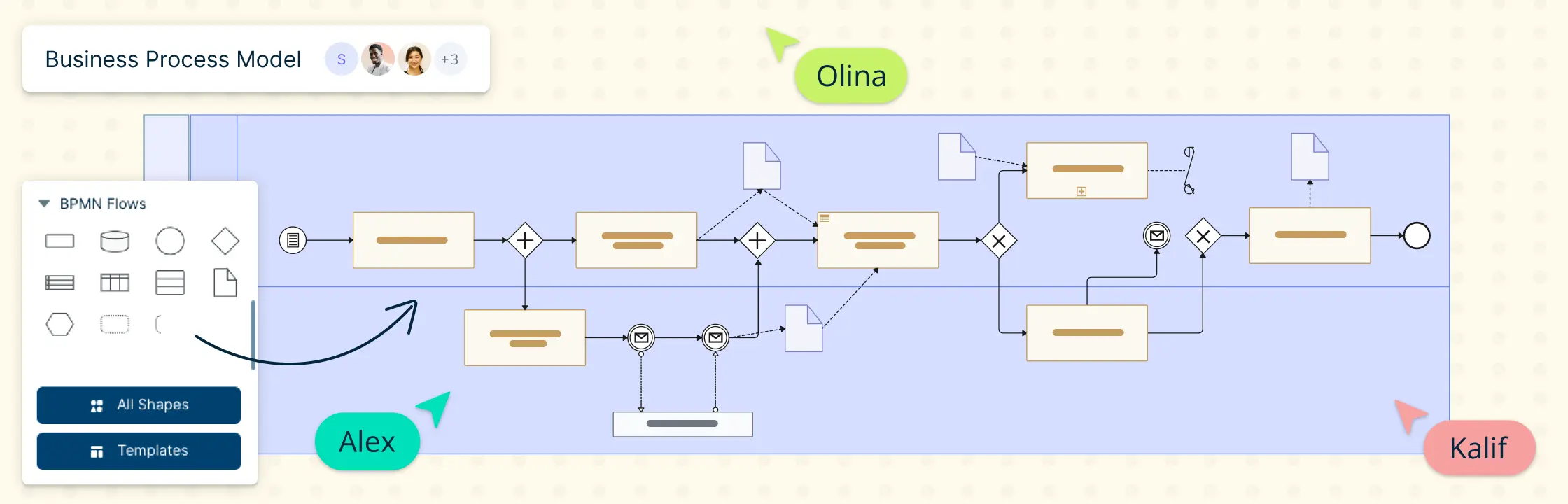
In this guide, we will delve into what BPMN is, including its history, when and how to use it, and the benefits it brings to process work. We’ll explore BPMN diagram elements and business process modeling notation symbols, provide examples of practical use, and show how tools like Creately help teams keep BPMN diagrams connected to their supporting process context.
Projects and processes organize different kinds of work. A project is temporary and produces a unique result, while a business process defines interconnected activities that can be repeated to produce an intended operational result. Organizations often use projects to introduce or improve processes, then rely on those processes for ongoing execution.
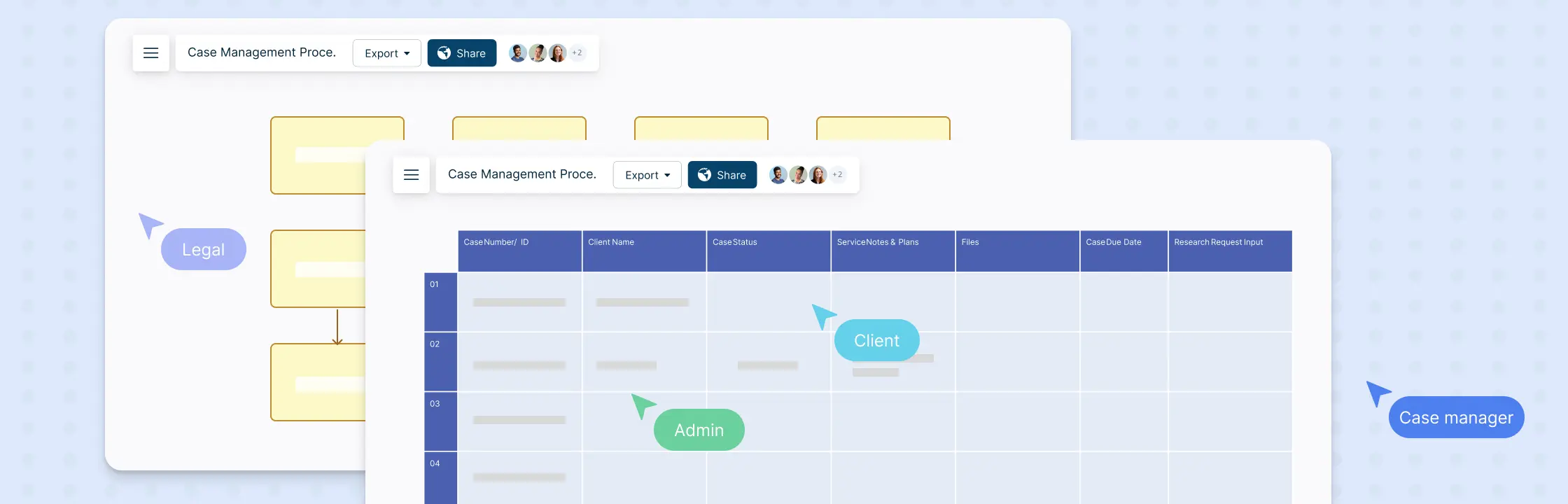
Case management coordinates assessment, planning, services, communication, monitoring, and evaluation around the needs and goals of an individual or family. The exact process, professional responsibilities, and terminology vary across healthcare, social work, education, insurance, legal services, and other settings.
A process bottleneck occurs when one step has less capacity than the demand placed on it, restricting the flow and performance of the entire workflow. Bottlenecks can increase cycle time, create queues, delay handoffs, raise costs, and reduce the quality of the final outcome.
Business process analysis (BPA) is a structured examination of how a defined process currently works, how it performs against its objectives, and what evidence supports a change. It combines current-state mapping, operational data, stakeholder knowledge, root-cause analysis, and outcome measurement.
A purchase order process gives a business a consistent way to request, approve, place, receive, and pay for purchases. When the workflow is clear, teams can control spending, reduce delays, and understand who owns each decision and handoff.
Business process management (BPM) is an effective strategy for improving efficiency, streamlining operations, and aligning work with business goals. In practice, BPM works best when teams can see the process clearly, review it together, and keep documentation connected to how work is actually executed. This guide explains what BPM is, the different types, the lifecycle, templates, and how teams can use it to optimize operations with more consistency.
Why Business Process Mapping is Important Businesses don’t just crop up overnight. Every objective is achieved through systematic processes. Business process modeling lets everyone from the heads of departments to concerned staff figure out the why, what, where and when of these processes. Process maps take all the data from here and present it visually.
Business process modeling gives teams a shared way to understand how work moves across roles, systems, and decisions. A useful model should make ownership and handoffs clear, connect the process to its supporting context, and remain maintainable as the work changes. The following tips will help you design an effective Business Process Model..